
The WW1 Romanian Navy
Independent since 1878, Romania already had a flotilla on the Danube, but no real fleet. This one was able to be constituted thanks to the access to the black sea which it gained at the end of the Russo-Turkish war. On the coast of the Dubrusja, the port of Costanza was converted into an arsenal. Her first seagoing vessel was the gunboat Grivita, assisted by the sailing school Mircea. At the end of the 1880s, the addition of the small Elsiwck cruiser Elisabeta and other units strengthened its potential, while the Danube flotilla was also greatly improved. In 1899, a naval plan was established pleading for the construction of 6 coastal battleships, 4 dislocations and 12 torpedo boats. The Danube division was to be supported by 8 monitors and 12 river torpedo boats.
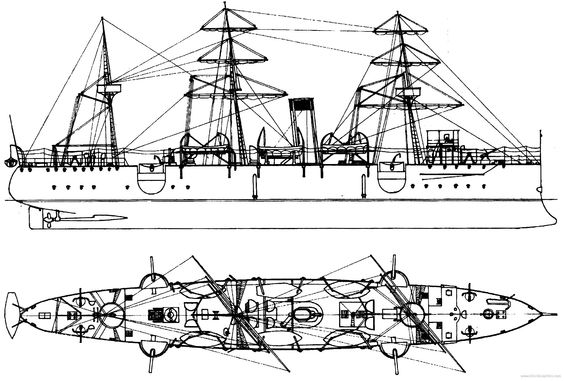
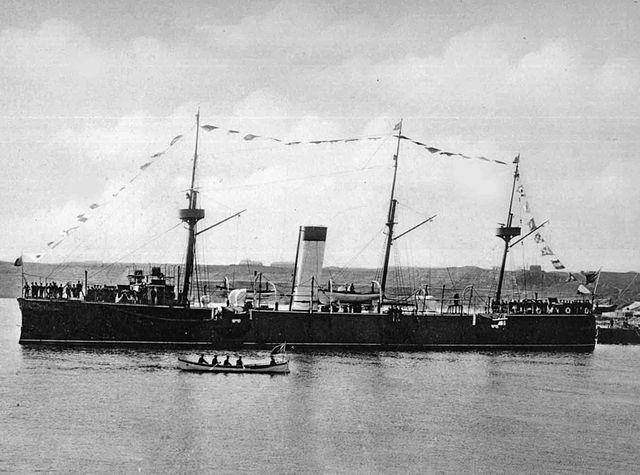
Romanian Cruiser Elisabeta 1888
This program does not live on an entire achievement. Following the first Balkan war, when it was neutral, Romania received from Bulgaria a piece of coastal territory on the Black Sea. But the Bugarie changed its attitude and in the Second Balkan War, following its aggression, Romania invaded it in return for the North and occupied it. Romania gained an important strip of coastal land up to Varna. The program of 1899 had succeeded the 1912 program pleading for 6 cruisers and 12 heavy destroyers, then a supplementary plan specified a battleship of 13,000 tons. All these programs were doomed because of the modest finances that could be given to the navy. The First World War put an end to these developments. Here are the Romanian numbers at this date:
1 Cruiser: Elisabeta (1888).
11 torpedo boats: 3 high-sea class Naluca (1888) and 8 fluvial class Capitan Nicolae Lascar Bogdan (1907).
14 Miscellaneous: Grivita gunboat (1880, training ship), 3 Oltul class gunboats (1888), 2 Rahova class (1882), 3 Monteano class fishermen (1893), Alexandru cel Bun (1882), 4 Class Ion river classliners C Bratianu (1907).
Tonnage 1914: Cruisers: 1 Raiders: 11 Various: 14
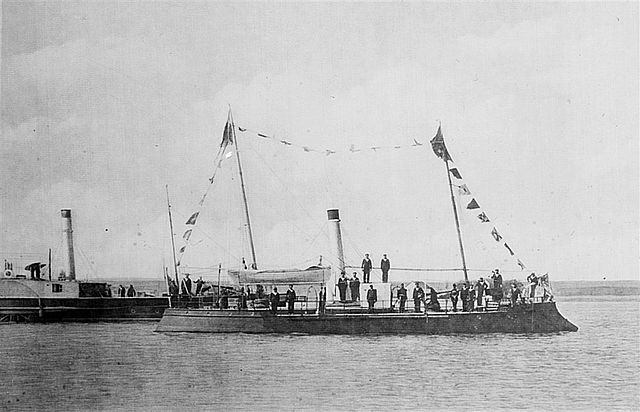
Gunboat Fulgerul 1873
The Romanian Navy during the First World War:
Surrounded by its powerful neighbors, Romania could only remain neutral at great cost. Moreover, the power was in the hands of Francophiles who had received assurances from France on future territorial enlargements in case of participation in the war alongside the allies. What she did in 1915.
The critical situation in Russia began to cast doubt on the validity of this decision, but in 1916 she declared war on Austria-Hungary. This decision was fraught with consequences: Germany and Bulgaria went to war against it, and the poorly equipped Romanian troops were quickly pushed into the defense and then swept away by an offensive that ended only with the capture and occupation of Bucharest.
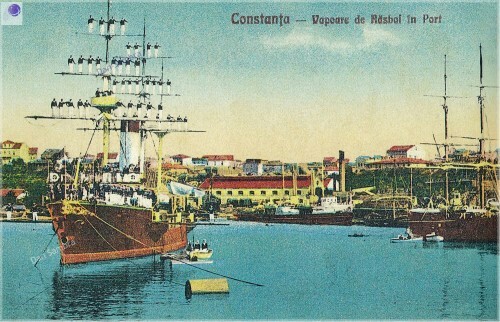
Costanza harbor
The horrendous human losses (50% of the troops engaged) meant that the few remaining forces had no alternative but to retreat to Russia or they participated in the holding of the front in the southern sector. The navy was more or less forced into inaction, in particular deprived of four powerful destroyers ordered from Italy and requisitioned. The Elisabeta Cruiser for example, was disarmed that same year 1916.
It was decided to requisition and transform 4 cruise ships into auxiliary cruisers. The latter carried out escort missions and were integrated into the Russian Black Sea Fleet. When compared with the Danube division, which was comparatively well equipped, she was able to stand up to the Austro-Hungarian flotilla.
With the 1917 revolution in Russia, Romania lost its only local ally and its situation became internable. In May 1918, she signed an armistice with very harsh conditions, losing the Dobrudja in favor of Austria. With the armistice of November and the defeat of the central empires, Romania recovered the Dobrudja and its territory gained some 50% of coastline to the North, stopping south of Dniester.
In 1920, this time she received her expected ships, including two Italian destroyers, but also four ASM gunboats to France, three Austro-Hungarian river monitors, and seven Austrian torpedo boats.
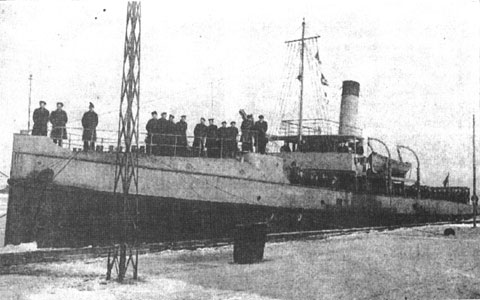
Romanian minelayer Aurora
 Latest Facebook Entry -
  X(Tweeter) Naval Encyclopedia's deck archive
 Instagram (@navalencyc)


 French Navy
 Royal Navy
 Russian Navy
 Armada Espanola
 Austrian Navy
 K.u.K. Kriegsmarine
 Dansk Marine
 Nautiko Hellenon
 Koninklije Marine 1870
 Marinha do Brasil
 Osmanlı Donanması
 Marina Do Peru
 Marinha do Portugal
 Regia Marina 1870
 Nihhon Kaigun 1870
 Preußische Marine 1870
 Russkiy Flot 1870
 Svenska marinen
 Søværnet
 Union Navy
 Confederate Navy
 Armada de Argentina
 Imperial Chinese Navy
 Marine Haitienne
 Marinha do Portugal
 Mexico
 Kaiserliche Marine
 1898 US Navy
 Argentina
 Brazil
 Chile
Chile Cuba
Cuba Peru
Peru Bulgaria
 Denmark
 Greece
 Netherlands
 Norway
 Portugal
 Romania
 Sweden
 China
China Thailand
 Sovietskiy Flot
 Royal Canadian Navy
 Royal Australian Navy
 RNZN Fleet
 RIN Fleet
 Chinese Navy 1937
 Kriegsmarine
 Chilean Navy
 Danish Navy
 Finnish Navy
 Hellenic Navy
 Polish Navy
 Romanian Navy
 Turkish Navy
 Royal Yugoslav Navy
 Royal Thai Navy
 Minor Navies
 Albania
 Austria
 Belgium
 Columbia
 Costa Rica
 Cuba
Cuba Czechoslovakia
 Dominican Republic
 Haiti
Haiti Hungary
 Honduras
 Estonia
 Iceland
 Eire
Eire Equador
 Iran
Iran Iraq
Iraq Latvia
 Liberia
 Lithuania
 Mandchukuo
 Morocco
 Nicaragua
 Persia
 San Salvador
 Sarawak
 Uruguay
 Venezuela
 Zanzibar
 Warsaw Pact Navies
 Bulgaria
 Hungary

 Bundesmarine
 Dutch Navy
 Marina Militare
 Yugoslav Navy
 Chinese Navy
 Indian Navy
 Indonesian Navy
 JMSDF
JMSDF North Korean Navy
 Pakistani Navy
 Philippines Navy
 ROKN
ROKN Rep. of Singapore Navy
 Taiwanese Navy
 Vietnam People’s Navy
 IDF Navy
 Saudi Navy
 Royal New Zealand Navy
 Egyptian Navy
 South African Navy


 Ukrainian Navy