
 The Portuguese Navy in WW1
Pre-1914 Portugal was a troubled country emerging just from a revolution: The partition of the former Portuguese colonial empire in Africa being shared between England and Germany since the Berlin Treaty in 1878, and the alliance with England reactivated with the treaty of Windsor in 1899. The discredited monarchy ended in 1908 with the assassination of Don Carlos I, followed by a violent revolution which led in 1910 to the accession to the throne of the house of Braganza, and Manuel II, with the promise of a parliamentary monarchy. But the new monarchy was soon corrupt and unpopular. The clashes were violent between Socialist Republicans and Royalists, and the Navy played its role in particular during the bombing of Lisbon. The crews were overwhelmingly in favor of the republic. The latter was proclaimed on October 5, 1910.
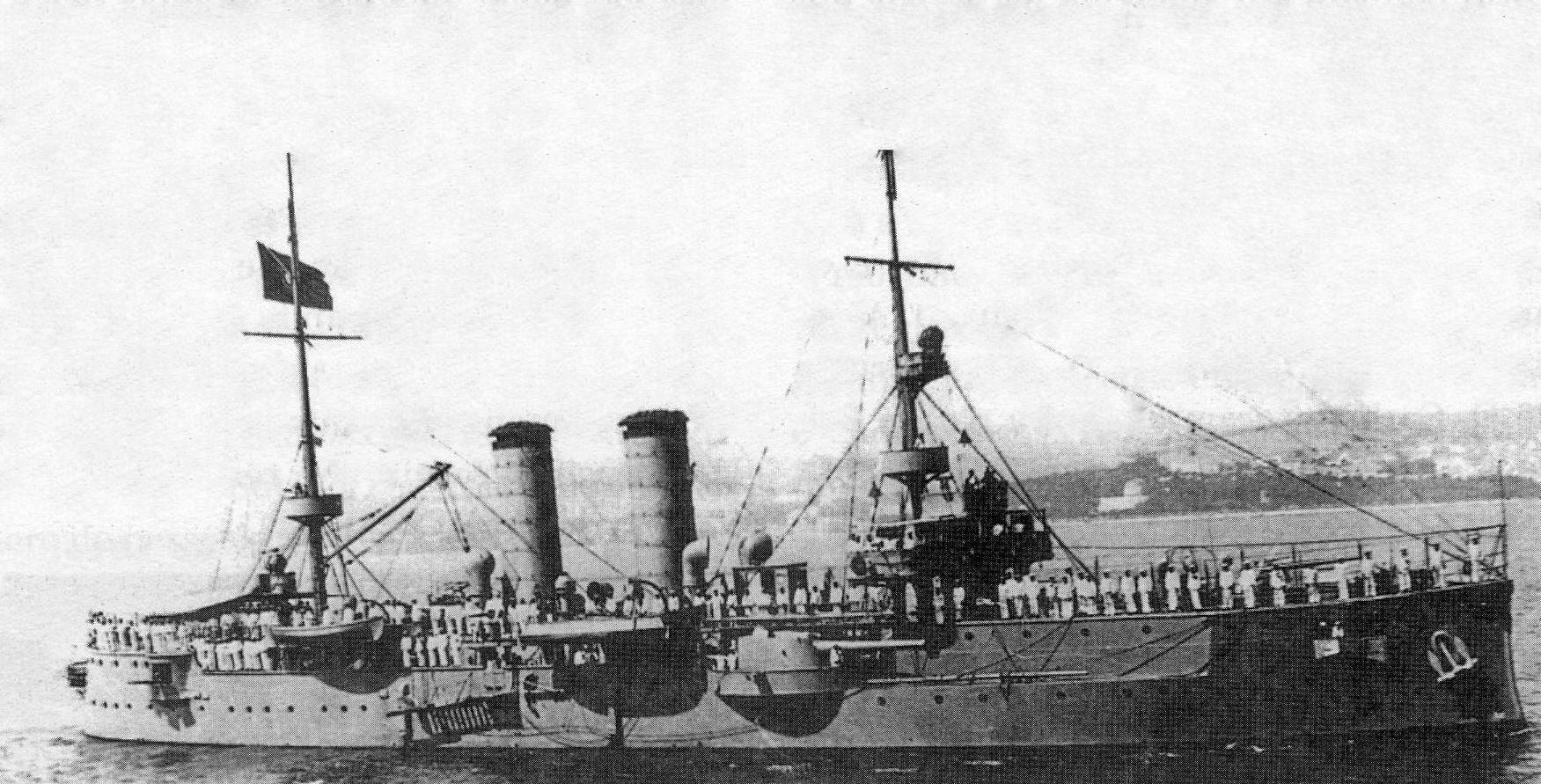
Coastal Battleship Vasco Da Gama
⚠ Note: This post is in writing. Completion expected later in 2024.
❯❯❯❯❯❯❯❯❯❯❯
Republicans being a little more concerned with the well-being of the people than the ancient monarchy of past glories, the ambitious naval program of 1890 was abandoned. Moreover, the civil war had emptied the state coffers. The plan of 1907, relatively modest, but still providing 2 battleships and 6 cruisers, was not approved for lack of funds. But soon the ambition to recover colonial territories in the face of the pretensions of Germany in particular made approve a new large-scale plan in 1912: Three dreadnought battleships of the Minas Gerais type, 3 cruisers, and light buildings. It was reduced in 1913 to 2 cruisers, 6 destroyers and 3 submersibles, built mostly in Great Britain. The war made them requisition. Also it is with forces relatively obsolete for the essential that Portugal went to war:
1 Coastal Battleships: The Vasco da Gama (1875).
4 Cruisers: Adamastor, Sao Gabriel, Dom Carlos I and Rainha Dona Amelia (1896-99).
3 Destroyers: 2 class Guadina (1911 – 2 others under construction in Lisbon), Tejo (1901). The Liz ordered in Italy, was requisitioned by the English and became the HMS Arno.
4 Torpedo Boats: No. 1 to 4 (1881-86).
1 submersible: Espadarte (1912).
24 Miscellaneous: Avisos Rainha de Portugal (1875) and Alfonso d’Albuquerque (1884), 2 gunboats class Rio Lima (1875), 2 class Lurio (1907), 2 Class Beira (1910, 3 others in 1917), Zambese (1886) ), Zaire (1884), Diu (1889), Limpopo (1890), Dom Luiz (1895), Patria (1903), 5 river gunboats class Cacheu (1902), Macau (1909), Flexa (1909). Patrolmen Dili, Lince (1911), aviso and yacht of Admiralty Cinco de Octubre (1900).
Tonnage 1914:
Armored Coast Guard: 1 – Cruisers; 4 – Destroyers: 3 – Raiders: 4 – Submersibles: 1 – Various: 24
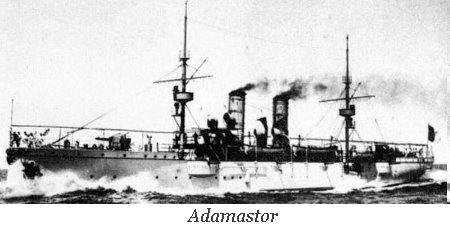
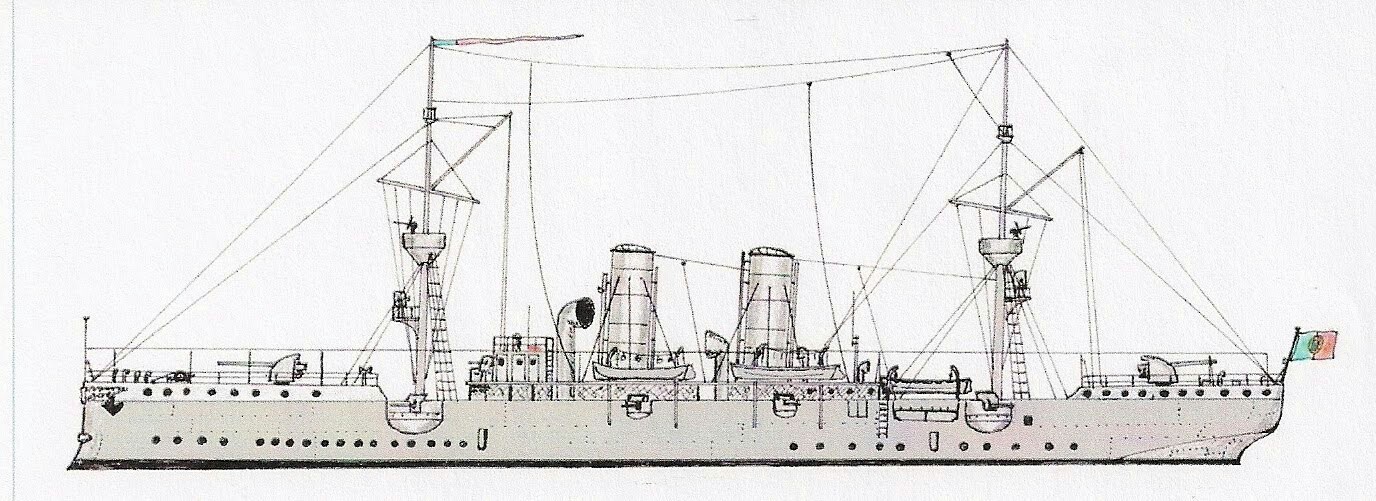
Cruiser Adamastor
The Portuguese Navy during the First World War:
In fact, Portugal began to undertake military operations in Africa directed against the Germans and to attack German commercial traffic in the area. The war was an opportunity to recover ancient territories and settlements. But the official declaration of war awaited March 1916. An important Portuguese expeditionary force set out to fight on the northern front at Loos in 1916, but in Africa, the German counter-offensive forced the Mozambique border. At sea a duel of artillery took place between the gunboat Augusto de Castillo escorting a liner and the U139 that commanded the Lothar von Arnaud of the Pierière. The latter was a trawler (Elite) requisitioned in 1917 and armed with a 65 mm gun and a 47 mm. The U139 was a submersible cruiser armed with 2 pieces of 150 mm. The fight for honor led to the destruction of the courageous escort who sank on 14 October 1918. Other buildings were requisitioned, such as the auxiliary cruiser Pedro Nunez, the Sado II minesweeper, and the Açor gunboat. In 1918, the Tete River gunboat Tete was also deployed on the Zambeze.
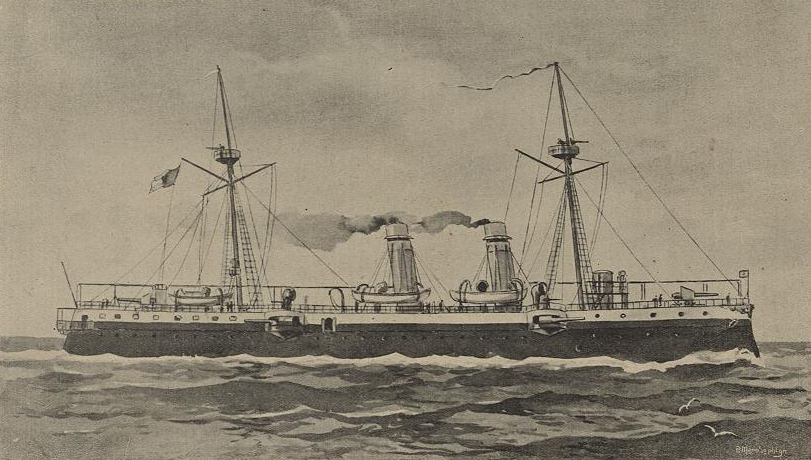
Cruiser Rainha Dona Amélia
The Portuguese military ports were Lisbon, with large dry docks, foundries and asenaux, but also Luanda in Angola, Lourenço Marques in Mozambique, and Port Delgado in the Azores, equipped with coastal batteries. The latter served as a transit base for US transport to Europe. In exchange for its commitment to the allies, Portugal received from Germany war reparations to the Versailles treaty and a piece of territory in northern Mozambique belonging to the German colony. She also received six ex-Austro-Hungarian torpedo boats and a Turkish gunboat.
 Latest Facebook Entry -
  X(Tweeter) Naval Encyclopedia's deck archive
 Instagram (@navalencyc)


 French Navy
 Royal Navy
 Russian Navy
 Armada Espanola
 Austrian Navy
 K.u.K. Kriegsmarine
 Dansk Marine
 Nautiko Hellenon
 Koninklije Marine 1870
 Marinha do Brasil
 Osmanlı Donanması
 Marina Do Peru
 Marinha do Portugal
 Regia Marina 1870
 Nihhon Kaigun 1870
 Preußische Marine 1870
 Russkiy Flot 1870
 Svenska marinen
 Søværnet
 Union Navy
 Confederate Navy
 Armada de Argentina
 Imperial Chinese Navy
 Marine Haitienne
 Marinha do Portugal
 Mexico
 Kaiserliche Marine
 1898 US Navy
 Argentina
 Brazil
 Chile
Chile Cuba
Cuba Peru
Peru Bulgaria
 Denmark
 Greece
 Netherlands
 Norway
 Portugal
 Romania
 Sweden
 China
China Thailand
 Sovietskiy Flot
 Royal Canadian Navy
 Royal Australian Navy
 RNZN Fleet
 RIN Fleet
 Chinese Navy 1937
 Kriegsmarine
 Chilean Navy
 Danish Navy
 Finnish Navy
 Hellenic Navy
 Polish Navy
 Romanian Navy
 Turkish Navy
 Royal Yugoslav Navy
 Royal Thai Navy
 Minor Navies
 Albania
 Austria
 Belgium
 Columbia
 Costa Rica
 Cuba
Cuba Czechoslovakia
 Dominican Republic
 Haiti
Haiti Hungary
 Honduras
 Estonia
 Iceland
 Eire
Eire Equador
 Iran
Iran Iraq
Iraq Latvia
 Liberia
 Lithuania
 Mandchukuo
 Morocco
 Nicaragua
 Persia
 San Salvador
 Sarawak
 Uruguay
 Venezuela
 Zanzibar
 Warsaw Pact Navies
 Bulgaria
 Hungary

 Bundesmarine
 Dutch Navy
 Marina Militare
 Yugoslav Navy
 Chinese Navy
 Indian Navy
 Indonesian Navy
 JMSDF
JMSDF North Korean Navy
 Pakistani Navy
 Philippines Navy
 ROKN
ROKN Rep. of Singapore Navy
 Taiwanese Navy
 Vietnam People’s Navy
 IDF Navy
 Saudi Navy
 Royal New Zealand Navy
 Egyptian Navy
 South African Navy


 Ukrainian Navy