
 Armada de Argentina: 2 Dreadnoughts, 8 Cruisers, 11 Destroyers, 13 Misc. 1914.
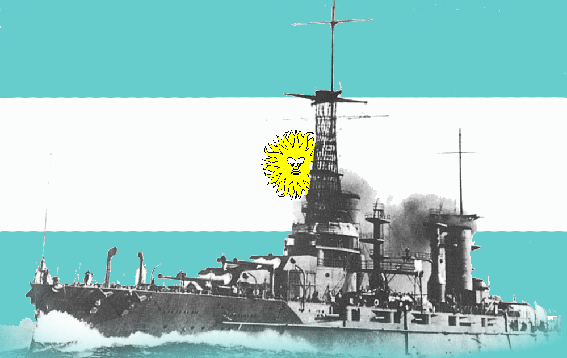 History of the Argentine Navy:
The Armada de la República Argentina was born in 1810, following the independence from Spain, on may 25, and funded by Admiral William Brown. It was preceded by an had oc one to support Manuel Belgrano in the Paraguay campaign, but sank without joining the action by ships from Montevideo. Irish-born Brown built a second one composed of international privateers as there was no budget to match yet.
Gradually it will saw action against Brazil and through the Anglo-French blockade, and grew in size when financed allowed, up to 5 armoured cruisers, 4 coastal defence ironclads, 3 second-class cruisers, 7 small cruisers and gunboats, 4 destroyers and 22 TBs in the late 1870. Before the 1907 program, the most impressive ships in the fleet has been the 6000t Italian-built Garibaldi class armoured cruisers. At that time it amounted to 600 officers and 7760 seamen, and a Marine corps. Soon, the Armada will enter the dreadnought race.
The Argentina Armada in 1914
 ARA Almirante Brown, 1880′ central battery Ironclad, built by Samuda Brothers of London A large fleet in 1914, it was second in tonnage for South America, ahead of Chile but behind Brazil. In 1904, an agreement for armament limitations was signed in 1904 by Brazil and Chile. In a delicate financial position, the Argentinian government saw an opportunity for a break in military spending. But this was followed by Brazil ordering two new dreadnoughts, on its way to become the main maritime force of south America.
Articles:
[catlist name=”argentine-navy” numberposts=50 orderby=”title” order=”ASC”]
Indeed the two new ships outclassed the entire Argentine fleet. There was an intense debate as to whether or not to engage in this new naval race in time of such financial upheaval. Border incidents with Uruguay and Brazil led later the government to decide and approve a new, scaled-up plan for the fleet.
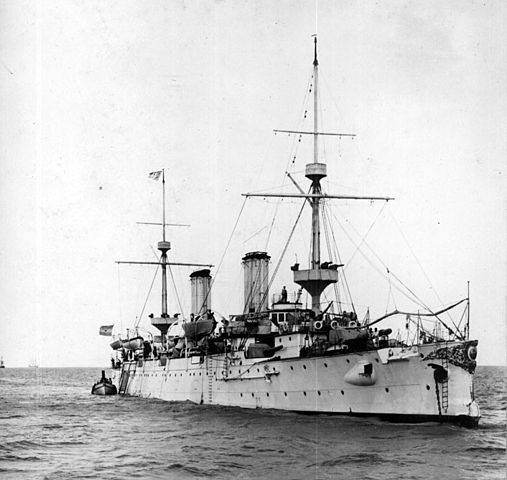
ARA Buenos Aires, Argentinian cruiser (1895)
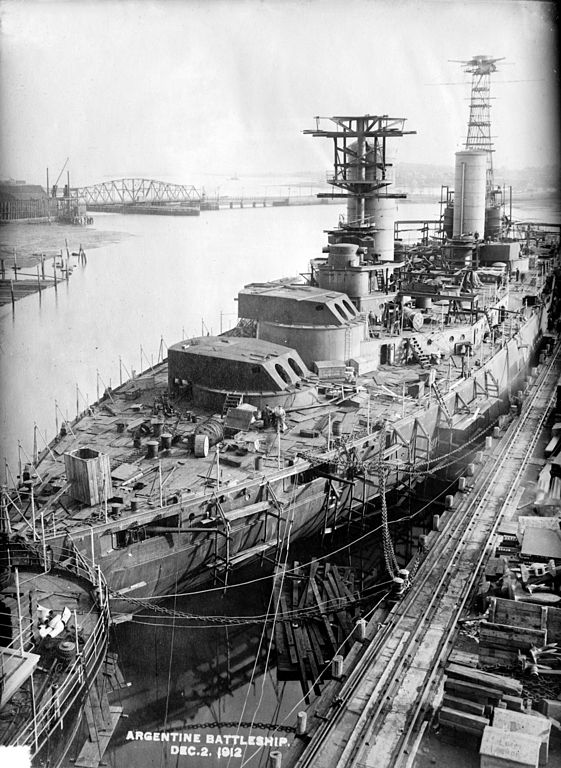
The Rivadvia in completion in 1912
Ambitious, the latter in 1907 planned two battleships built in the USA, a third remaining suspended to an additional Brazilian order, nine destroyers, and twenty-one torpedo boats. The latter, however, never arrived and were partly cacanceledue to a lack of funds.
General Context
Argentinian Naval History prior to 1914
May Revolution (1810): The new government in Buenos Aires created a small naval force to support military campaigns.
William Brown: An Irish-born merchant captain with no formal naval training took command and became the founding father of Argentine sea power.
Battle of Montevideo (1814): Brown led a converted squadron to a decisive victory over Spanish forces, ending their river chokehold. May 17th is still celebrated as Argentine Navy Day.War with Brazil (1825–1828): Brown commanded the fleet in successful operations against the Empire of Brazil over control of the Banda Oriental (now Uruguay).
Decline and Modernization (1830s–1890s) – Civil Wars: Internal conflicts caused the national fleet to stagnate and decline through the mid-19th century.Steam Power: The navy acquired its first steam-driven warship, the Merced, in 1849.
Ironclad Era: By the late 19th century, Argentina began purchasing modern armored cruisers and ironclads (such as the 1880s Almirante Brown) to counter regional tensions.The South American Dreadnought Race (1907–1914)
Regional Rivalry: An intense naval arms race began in 1907 between Argentina, Brazil, and Chile after Brazil ordered powerful new dreadnoughts.
To maintain parity, Argentina ordered two massive dreadnought battleships, ARA Rivadavia and ARA Moreno, from the American firm Fore River Shipbuilding Company.Completion (1914): ARA Rivadavia was commissioned in August 1914, making Argentina’s fleet second in tonnage in South America just as World War I began.
Naval Rivalry
The Chile–Argentina naval rivalry was a fierce, late-19th-century arms race driven by volatile territorial disputes over Patagonia, Tierra del Fuego, and the Beagle Channel. Armed conflict was narrowly averted by the historic Pacts of May in 1902, establishing the world’s first modern naval arms limitation agreement.
Post-War Shifts (1880s), and Chilean Dominance: Following victory in the War of the Pacific (1879–1883), Chile emerged with arguably the most powerful navy in the Americas.
The Trigger (1887): To consolidate power, Chile ordered the advanced battleship Capitán Prat alongside new cruisers.
Argentine Reaction: Fearful of Chilean hegemony and territorial encroachment in unexplored Patagonia, Argentina abandoned its “brown-water” coastal defense strategy and immediately ordered two battleships of its own
The Escalation: Tit-for-Tat Shipbuilding (1890s): Throughout the 1890s, both countries utilized soaring tax revenues from economic booms to out-buy the other.
Argentina’s Edge: Argentina aggressively acquired four Italian-built Garibaldi-class armored cruisers (San Martín, Pueyrredón, General Belgrano, and Garibaldi), temporarily pulling ahead in tonnage.
Chile’s Counter: Chile bolstered its forces by ordering high-speed protected and armored cruisers like the revolutionary Esmeralda.The Break Point (1901): Nationalism peaked when Chile ordered two fast battleships from Britain, prompting Argentina to retaliate by issuing tenders for even larger battleships.
Resolution – The Pacts of May (1902): With both nations on the brink of bankruptcy and British commercial interests heavily threatened by a potential war, the United Kingdom stepped in to mediate. Signed on May 28, 1902, the Pacts of May successfully defused the crisis through unprecedented military restrictions.
The treaties assigned distinct maritime zones, recognizing Chile’s influence in the Pacific Ocean and Argentina’s in the Atlantic Ocean / Rio de la Plata.
Fleet Demilitarization: Existing major capital ships—including Chile’s Capitán Prat and two Argentine armored cruisers—had their main armaments partially disabled.
The Great Ship Dispersal: Warships currently under construction in Europe were abruptly sold off. Chile’s contracted battleships were bought by the British Royal Navy (becoming the Swiftsure class), while Argentina’s uncompleted cruisers were sold to Japan (becoming the Kasuga class).
Argentinian economic situation 1900-1914
 Between 1900 and 1914, Argentina experienced its golden economic era, operating as one of the richest and fastest-growing economies in the world. Driven by an export boom of agricultural goods, the country’s Per Capita Gross Domestic Product (GDP) ranked among the top ten globally, occasionally surpassing nations like France, Germany, and Italy.
Agricultural Export Boom: The widespread adoption of refrigerated shipping (refrigoríficos) allowed Argentina to become a global powerhouse in exporting chilled beef, mutton, wheat, corn, and flax.
Foreign Capital: British investors heavily financed the nation’s infrastructure, funding ports, urban utilities, and public works.The Railway Network: The British-built railway system expanded aggressively, connecting the fertile Pampas directly to the ports of Buenos Aires and Rosario for efficient export.
Mass Immigration: Millions of European immigrants—primarily from Italy and Spain—flooded into the country, providing the massive labor force required for agricultural expansion and urban construction.
Vulnerabilities and Structual Flaws: Despite incredible wealth, the Argentine economy was highly fragile due to deep structural imbalances:The Latifundia System: Vast tracts of fertile land remained concentrated in the hands of a small elite oligarchy, preventing the rise of a stable, land-owning middle class in rural areas.
Extreme External Dependence: The entire economy relied on high global demand for commodities and a continuous influx of foreign capital, leaving it highly vulnerable to international market shocks.
Vulnerability to Weather: Bad harvest years due to droughts or locust plagues caused immediate, severe shocks to the national balance of payments.The 1914 CollapseThe golden era came to an abrupt halt with the onset of World War I in 1914. The outbreak of war instantly shattered the globalization model Argentina depended on:
Capital Flight: European powers halted all foreign investments and rapidly withdrew credit to fund their own war efforts.
Shipping Paralysis: Maritime trade routes were severely disrupted by naval blockades and a shortage of available merchant ships.
Immigration Reversal: The massive influx of labor stopped completely as European workers returned home to fight, plunging Argentina into a severe recession that marked the end of its uninterrupted economic rise.
Strength in 1914:
By size and tonnage, and to put things into perspective, the Argentinian Navy far outclassed any European Navy but France, UK, and the Central powers. It could have wrecked also any South American navy but Brazil.
7 Battleships: -2 Dreadnoughts classe Rivadavia. (Operationnal dec.1914, march 1915). Two El Plata (1874) coast guards, two Libertad (1890) class, and Almirante Brown (1880).
8 Cruisers: 4 Garibaldi class (1895), Buenos Aires (1895), 9 de julio (1892), 25 de mayo (1890), Patagonia (1885).
11 Destroyers: 4 San Luis (1911), 2 La Plata, 2 Catamarca, 3 Corrientes (1896).
13 Misc.: 2 Rosario class gunboats (1908), 2 Commodoro Py TBs (1891), 6 Bathurst type TBs (1890), TB Espero, Patria (1893) gunboat, Presidente Sarmiento (schoolship). In order: 4 classe Mendoza class DDs. Requisitioned and integrated to the French Navy as the Aventurier class.
Argentina in ww1
In the wake of the war, Argentina displayed a cautious neutrality, like the rest of America. The Armada remained inactive due to a lack of coal, the latter coming from English mines being reduced. Coal ships crossing the Atlantic indeed were known prey of U-boats. Three merchant ships violating territorial waters, flying the German flag, were captured. For the rest, the modest Argentinian merchant fleet was only slightly affected by the Battle of the Atlantic.
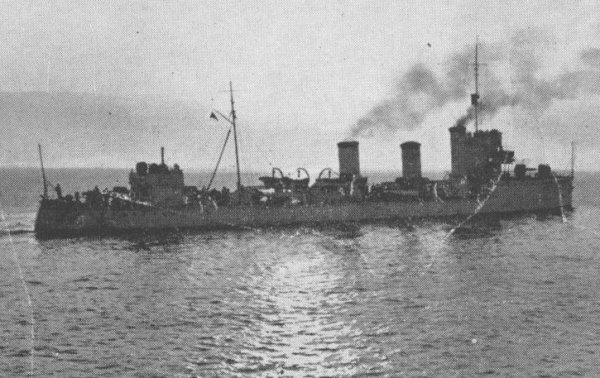
ARA Jujuy, La Plata class DDs. The Argentinian Navy did patrolled but never sank U-boats despite intense activity and three ships sunk, contrary to Brazil.
The press and Argentines in general were not in favor of a military commitment on either side. However, from April 1917 onward, an Argentinian freighter was sent to the bottom by an U-Boat, followed by two others in 1918. Despite compensation from Germany and flat apologies from the German Ambassador, diplomatic relations between the two Countries deteriorated fast.
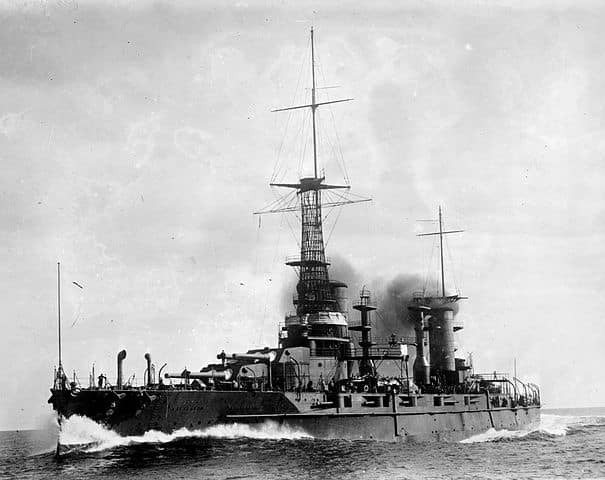
Rivadvia in trials, 1912
In Argentina itself, a German secret agent, Herr Arnold, successfully poisoned a full load of mules bound to be shipped to Mesopotamia (where Commonwealth Indian troops made extensive use of it). He did the same with grain loads, and was preparing to infect sheep and beef when finally caught in 1917. He was summarily shot by agents of the English intelligence service. But these events remained largely secret and Argentina, unlike Brazil, did not break diplomatic relations with Germany. As a result, Argentina remained neutral until the capitulation of Germany and never took part in naval operations.
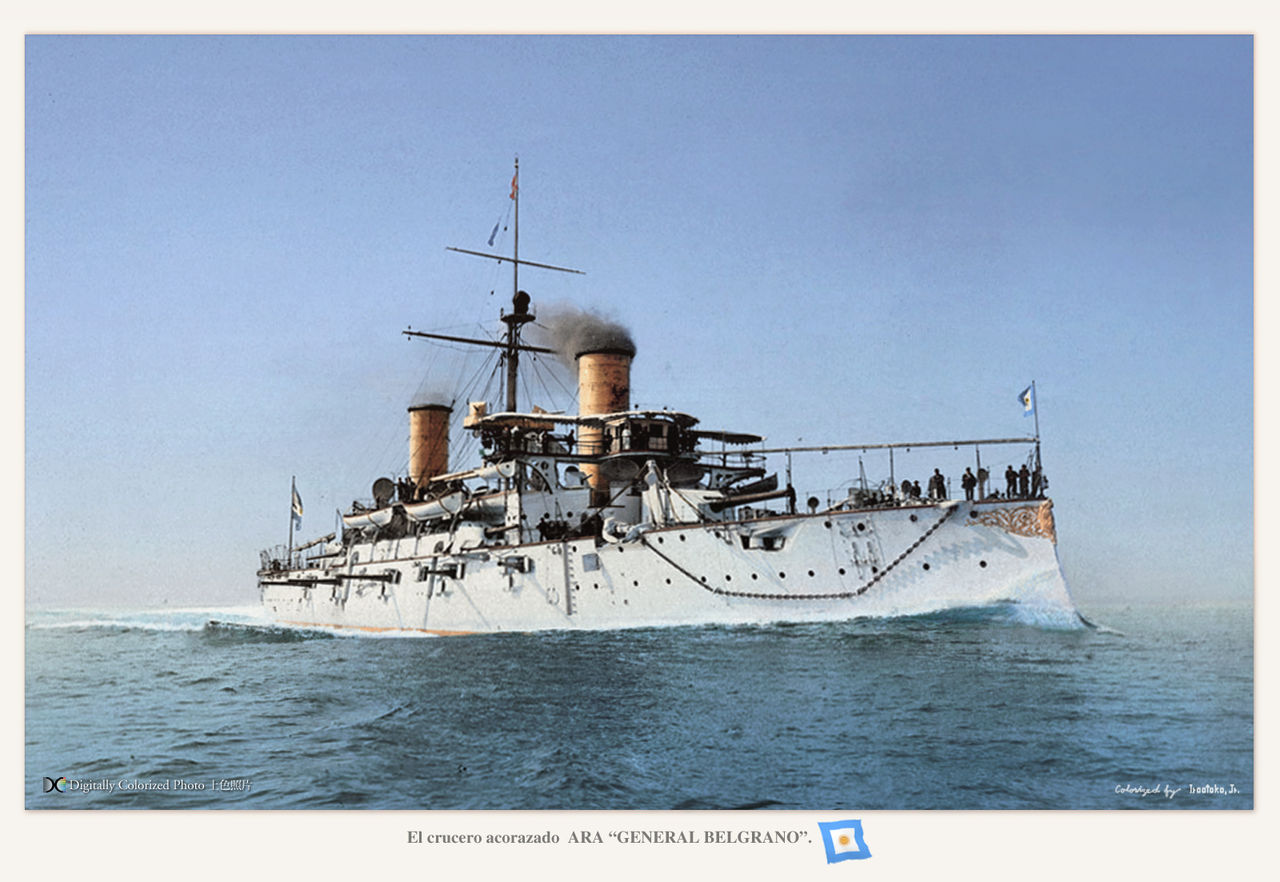
ARA General Belgrano, colorized by Hirootoko jr.
After the war
This forced neutrality leaning favorably for the Germans resurfaced in 1930 when the latter resumed spying missions in America, and again in 1945 as a haven for Nazi criminals on the run. Needless to say, he Argentinian Navy was also neutral in ww2. By 1940, the Argentine Navy was ranked as the eighth most powerful in the world, and the Rivadavia-class battleships would remains the most impressive US-built dreadnoughts ever built for export. The only test for a rejuvenated, rebuilt Argentine after ww2 was of course the Falklands, a serious test which led to political turmoil and eventually a change of regime. There will be of course one article on the Argentine Navy in ww2, another in the Cold War.
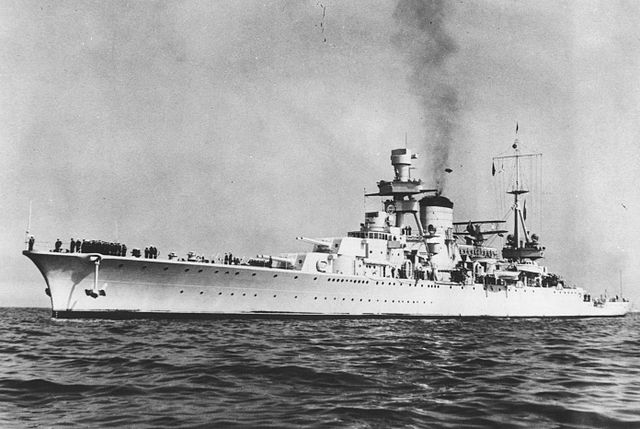
The 25 de Mayo was an Interwar Italian-built light cruiser class
Sources:
Conways all the world’s fighting ships 1860-1905 and 1906-1921
wiki
List
 Latest Facebook Entry -
  X(Tweeter) Naval Encyclopedia's deck archive
 Instagram (@navalencyc)


 French Navy
 Royal Navy
 Russian Navy
 Armada Espanola
 Austrian Navy
 K.u.K. Kriegsmarine
 Dansk Marine
 Nautiko Hellenon
 Koninklije Marine 1870
 Marinha do Brasil
 Osmanlı Donanması
 Marina Do Peru
 Marinha do Portugal
 Regia Marina 1870
 Nihhon Kaigun 1870
 Preußische Marine 1870
 Russkiy Flot 1870
 Svenska marinen
 Søværnet
 Union Navy
 Confederate Navy
 Armada de Argentina
 Imperial Chinese Navy
 Marine Haitienne
 Marinha do Portugal
 Mexico
 Kaiserliche Marine
 1898 US Navy
 Argentina
 Brazil
 Chile
Chile Cuba
Cuba Peru
Peru Bulgaria
 Denmark
 Greece
 Netherlands
 Norway
 Portugal
 Romania
 Sweden
 China
China Thailand
 Sovietskiy Flot
 Royal Canadian Navy
 Royal Australian Navy
 RNZN Fleet
 RIN Fleet
 Chinese Navy 1937
 Kriegsmarine
 Chilean Navy
 Danish Navy
 Finnish Navy
 Hellenic Navy
 Polish Navy
 Romanian Navy
 Turkish Navy
 Royal Yugoslav Navy
 Royal Thai Navy
 Minor Navies
 Albania
 Austria
 Belgium
 Columbia
 Costa Rica
 Cuba
Cuba Czechoslovakia
 Dominican Republic
 Haiti
Haiti Hungary
 Honduras
 Estonia
 Iceland
 Eire
Eire Equador
 Iran
Iran Iraq
Iraq Latvia
 Liberia
 Lithuania
 Mandchukuo
 Morocco
 Nicaragua
 Persia
 San Salvador
 Sarawak
 Uruguay
 Venezuela
 Zanzibar
 Warsaw Pact Navies
 Bulgaria
 Hungary

 Bundesmarine
 Dutch Navy
 Marina Militare
 Yugoslav Navy
 Chinese Navy
 Indian Navy
 Indonesian Navy
 JMSDF
JMSDF North Korean Navy
 Pakistani Navy
 Philippines Navy
 ROKN
ROKN Rep. of Singapore Navy
 Taiwanese Navy
 Vietnam People’s Navy
 IDF Navy
 Saudi Navy
 Royal New Zealand Navy
 Egyptian Navy
 South African Navy


 Ukrainian Navy