
1922: The Irish Naval service
The Anglo-Irish treaty of 1922 stipulated that for maritime affairs, Ireland must police its own customs and fishing areas, whereas the Royal Navy would take charge of Irish waters. The year after, the Irish coastal and Marine service was created, disbanded in 1924. A single ship was used at that time, Muirchù, requisitioned to take care of fisheries. It was only armed in 1936 with a single 3-in gun. In 1938 however, the Royal Navy retired from Cork, Bere Haven and Lough Swilly, handing over these to the Irish Republic. Soon, the steamer Fort Rannich was armed too and joined the Muichù. To help them, two faster 60 ft Motor TBs were ordered from Vosper Thornycroft.
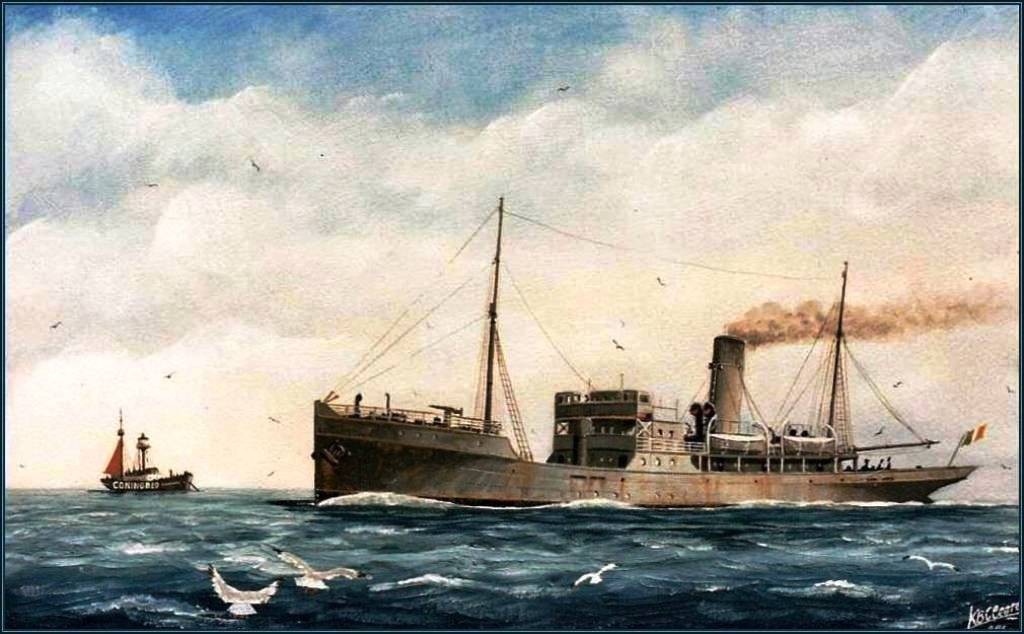
The Muirchù underway
The Irish Marine & Coastwatching service in WW2
When the war broke up, Ireland remained neutral. However the climate eased a bit compared to WW1 and the Germans could no longer use the local rebellion to divert attention and troops, although this was a landing point for some spies and double agents. Quite the contrary, many Irishmen volunteered to fight for the Empire. In June 1940, the tiny Irish Navy took its share of operations at Dunkirk: A single MTB, M1 made two trips to evacuate troops from the pocket. Soon the government found those valuable and ordered four more. In total in December 1940, the Irish fleet had six MTBs for patrols and two auxiliaries used as fishery protection vessels. These six crafts totalled twelve torpedoes, a deterrent for any approaching ship from the coast.
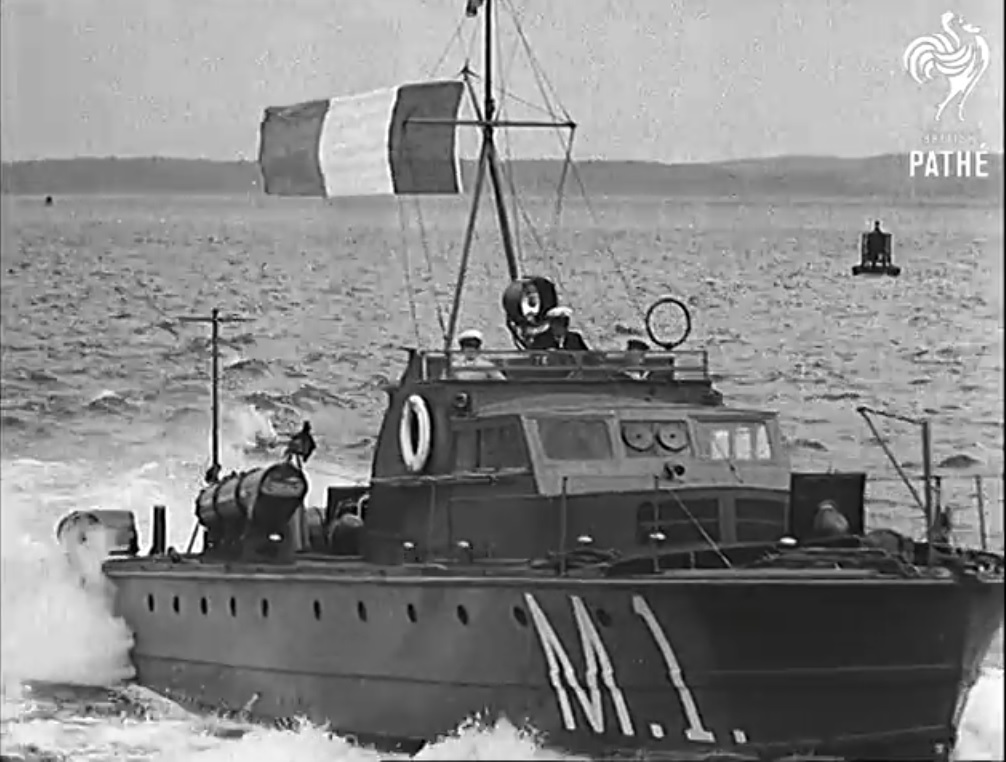
Irish MTB M1
The Irish service regulated merchant traffic (notably the Irish merchant fleet), contributing to ease the threat of U-Boats, and protect fisheries. Also minefields were laid in front of Cork and Waterford. The navy was renamed “Irish Marine Service” and in 1942, two more MTBs were obtained, so eight in total. Irish cargo ships sailed with full navigation lights due to Irish neutrality. Large tricolor bands were painted on their hull with the mention “EIRE” on their sides and decks.
However allied convoys passed nearby and had orders to not stop to rescue survivors of a ship torpedoed. Irish ships therefore often stopped. They rescued in total more than 500 seamen, and airmen from many nations. Nevertheless over 20% of Irish seamen lost their lives in attacks from U-Boats and aviation.
The Irish Defence Force in the cold war
Although modest by EU standard, the Irish Navy during the cold war was reformed again in 1946 as the “Irish Defence Forces”. Incorporated into the Commonwealth until 1948 and then independent, the Republic of Ireland (1949) still possessed a 8-MTB strong coastal force capable of enforcing fishing zones and territorial waters, composed exclusively of patrol boats. Ireland’s neutrality prevented the country to join NATO.
Originally, Ireland operated three former flower-class Corvettes, well adapted to Irish waters (Cliona, Macha, Maev), and retired in 1971-72. They had been modernized in 1953, becoming fishery protection vessels. There was also still active the old patrol boat (1936) Fort Brannoch, and 5 British MTBs remaining in service until 1947-48. Soon, the Navy gained three Banba class minesweepers, of the “Ton” type, and built locally. They were Banba, Fola, and Gràinne, acquired in 1971 and disarmed in 1983-86.
All in all, the Irish navy operated 8 patrol boats at the time of the fall of the USSR. At present, its booming economic situation gives the government means for a much more ambitious naval policy, even though local needs do not require greater force than that currently deployed unless it engages in a more proactive foreign policy and interventionist, which does not seem to be his priority.
Strength in 1990:
-8 Patrollers:
The Deidre in 1984 was a kind of “prototype” series, which succeeded to the three older Emer class, built 1970-79. The “flagship” of the Irish navy as of today is still the LÉ Eithne, a 2,000-ton ship capable of operating a helicopter. In addition, Ireland ordered two fast Peacock class vessels in 1988, the Orla and Ciara, built in Hong Kong.
Patrol Sloop Eithne (1983)
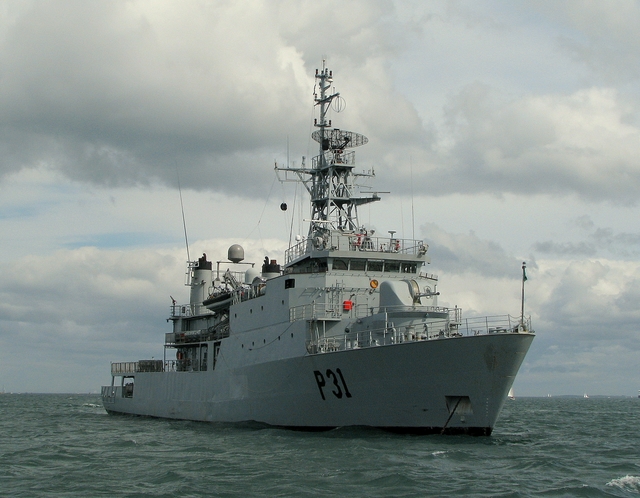
LÉ Eithne (P31) at Tall Ships Belfast, 2009
Built-in Cork, launched in 1983, and commissioned in December 1984, this building was based on the Emer but redesigned for a longer range (more than 200 nautical miles). Two ships were initially planned, but only one approved for budgetary reasons. The armament was mixed (Swedish Bofors, German cannon, French electronics and Dauphin helicopter). The latter was a patrol and rescue craft, unarmed in principle.
Specifications
Displacement: 1915 tons PC.
Dimensions: 80.8 x 12 x 4.3 m.
Propulsion: 2 propellers, 2 Ruston paxman diesels, 7200 hp and 19 knots max.
Armament: 1 57 mm Bofors gun, 2 20 mm Rheinmetall, 2 ML 7.62 mm.
Electronics: Decca Radars TP1229, AC1629c, HSA DA-05, Sonar Plessey.
Crew: 82
Large infographic by D. Mitch (naval analyses) showing details about the Eithne
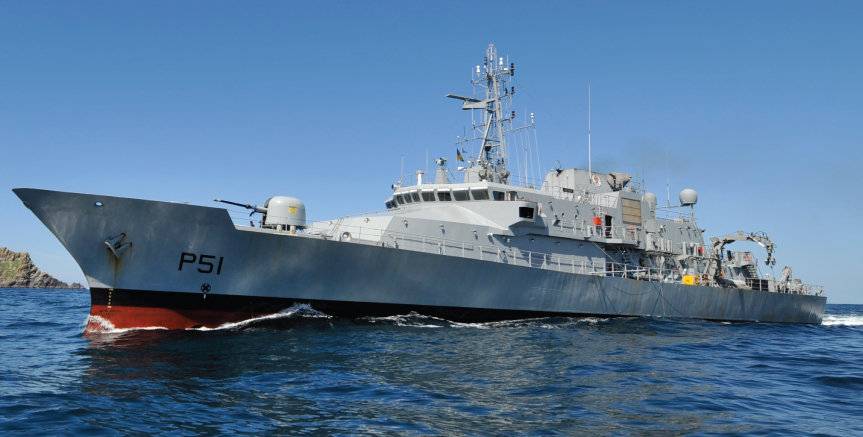
LÉ Róisín, commissioned in 1999, the most modern Irish warship, 1,500 tonnes, only gun-armed (Credit Irish Naval Service)
To come:
Cliona class patrol ships
Deidre/Emer class patrol ships
Orla class fast patrol boats
Le Roisin patrol corvette
Read More:
Conway’s all the world’s fighting ships 1906-1921 & 1922-46
//en.wikipedia.org/wiki/Irish_patrol_vessel_Muirch%C3%BA
wikiwand.com/en/Irish_Naval_Service
//coastmonkey.ie/irish-naval-service-anniversary-founding/
military.ie
 Latest Facebook Entry -
  X(Tweeter) Naval Encyclopedia's deck archive
 Instagram (@navalencyc)


 French Navy
 Royal Navy
 Russian Navy
 Armada Espanola
 Austrian Navy
 K.u.K. Kriegsmarine
 Dansk Marine
 Nautiko Hellenon
 Koninklije Marine 1870
 Marinha do Brasil
 Osmanlı Donanması
 Marina Do Peru
 Marinha do Portugal
 Regia Marina 1870
 Nihhon Kaigun 1870
 Preußische Marine 1870
 Russkiy Flot 1870
 Svenska marinen
 Søværnet
 Union Navy
 Confederate Navy
 Armada de Argentina
 Imperial Chinese Navy
 Marine Haitienne
 Marinha do Portugal
 Mexico
 Kaiserliche Marine
 1898 US Navy
 Argentina
 Brazil
 Chile
Chile Cuba
Cuba Peru
Peru Bulgaria
 Denmark
 Greece
 Netherlands
 Norway
 Portugal
 Romania
 Sweden
 China
China Thailand
 Sovietskiy Flot
 Royal Canadian Navy
 Royal Australian Navy
 RNZN Fleet
 RIN Fleet
 Chinese Navy 1937
 Kriegsmarine
 Chilean Navy
 Danish Navy
 Finnish Navy
 Hellenic Navy
 Polish Navy
 Romanian Navy
 Turkish Navy
 Royal Yugoslav Navy
 Royal Thai Navy
 Minor Navies
 Albania
 Austria
 Belgium
 Columbia
 Costa Rica
 Cuba
Cuba Czechoslovakia
 Dominican Republic
 Haiti
Haiti Hungary
 Honduras
 Estonia
 Iceland
 Eire
Eire Equador
 Iran
Iran Iraq
Iraq Latvia
 Liberia
 Lithuania
 Mandchukuo
 Morocco
 Nicaragua
 Persia
 San Salvador
 Sarawak
 Uruguay
 Venezuela
 Zanzibar
 Warsaw Pact Navies
 Bulgaria
 Hungary

 Bundesmarine
 Dutch Navy
 Marina Militare
 Yugoslav Navy
 Chinese Navy
 Indian Navy
 Indonesian Navy
 JMSDF
JMSDF North Korean Navy
 Pakistani Navy
 Philippines Navy
 ROKN
ROKN Rep. of Singapore Navy
 Taiwanese Navy
 Vietnam People’s Navy
 IDF Navy
 Saudi Navy
 Royal New Zealand Navy
 Egyptian Navy
 South African Navy


 Ukrainian Navy