
 Overview of the Italian Fleet (1914-1918)
An amalgamation of local navies
Like Germany, Italy was the result in 1914 of a recent unified political construction, but predated by nearly ten years: The Unified Kingdom of Italy was proclaimed on 17 March 1861. From then on, the Italian navy was born, as the result of gathering disparate units from the Duchy of Bourbon, Sardinia, Tuscany, Papal States and Sicilia. The bulk consisted of the Sardinian warships – by far the most powerful with that of Bourbon, then Neapolitan Navy, all very well equipped.
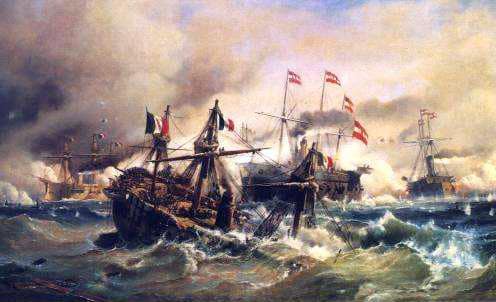
The Battle of Lissa, 1866
Under the impetus of Count Di Cavour, the peninsula’s leadership hero figure, supported by Garibaldi, the Sardinian/Piedmontese combined fleet became the most modern in the Mediterranean, spawning notably the first Italian battleships. The Battle of Lissa, which the Austrians consider to have won, remains a bitter memory for the Italians, in spite of a true naval potential in 1866. The Battle at large also consecrated the great return of ramming as a naval tactic (since the antiquity), launching a durable fad in hull design that will last until 1906 (The Dreadnought too had a ram, and used it in anger).
[catlist name=”italian-navy” numberposts=50 orderby=”title” order=”ASC”]
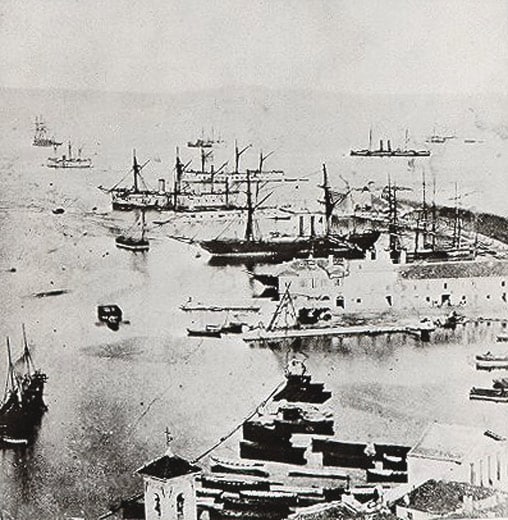
The Italian fleet at Ancona after the battle
Cuniberti breakthrough battleship design
After Lissa, budgets were reduced and the confidence given to the navy largely decreased. Augusto Riboty in 1871 owes the desire to inject new blood to his fleet. He did it superbly, in particular by ordering the series of battleships Duilio and Italia, armed with formidable (unmatched then worldwide) pieces of artillery. These cannons were in addition modern and rapid-firing, and the feat surprised and alarmed the British Admiralty for its own assets in the Mediterranean. The great Italian engineer Cuniberti designed a range of truly excellent ships, including the last pre-dreadnoughts battleships, which were “near-dreadnoughts” in a sense, lacking a true monocaliber gunnery just because he had not been granted the right budget.
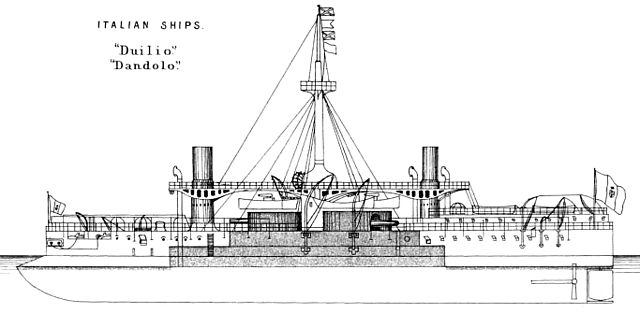
Duilio class ironclads, designed by Cuniberti (Brassey’s 1888).
Cuniberti’s four Regina Elena, were indeed considered the best in the category, thanks to a formidable secondary armament. Cuniberti wrote in an article published in Jane’s fighting Ships its famous plans of the Ideal battleship, a sort of modernized armoured cruiser, fast but equipped with same caliber heavy weaponry. The Admiralty, after lessons learnt at Tsushima, had been interested in it, and eventually “Jackie” Fisher ordered its most famous ship: The HMS Dreadnought, first monocaliber battleship worldwide.
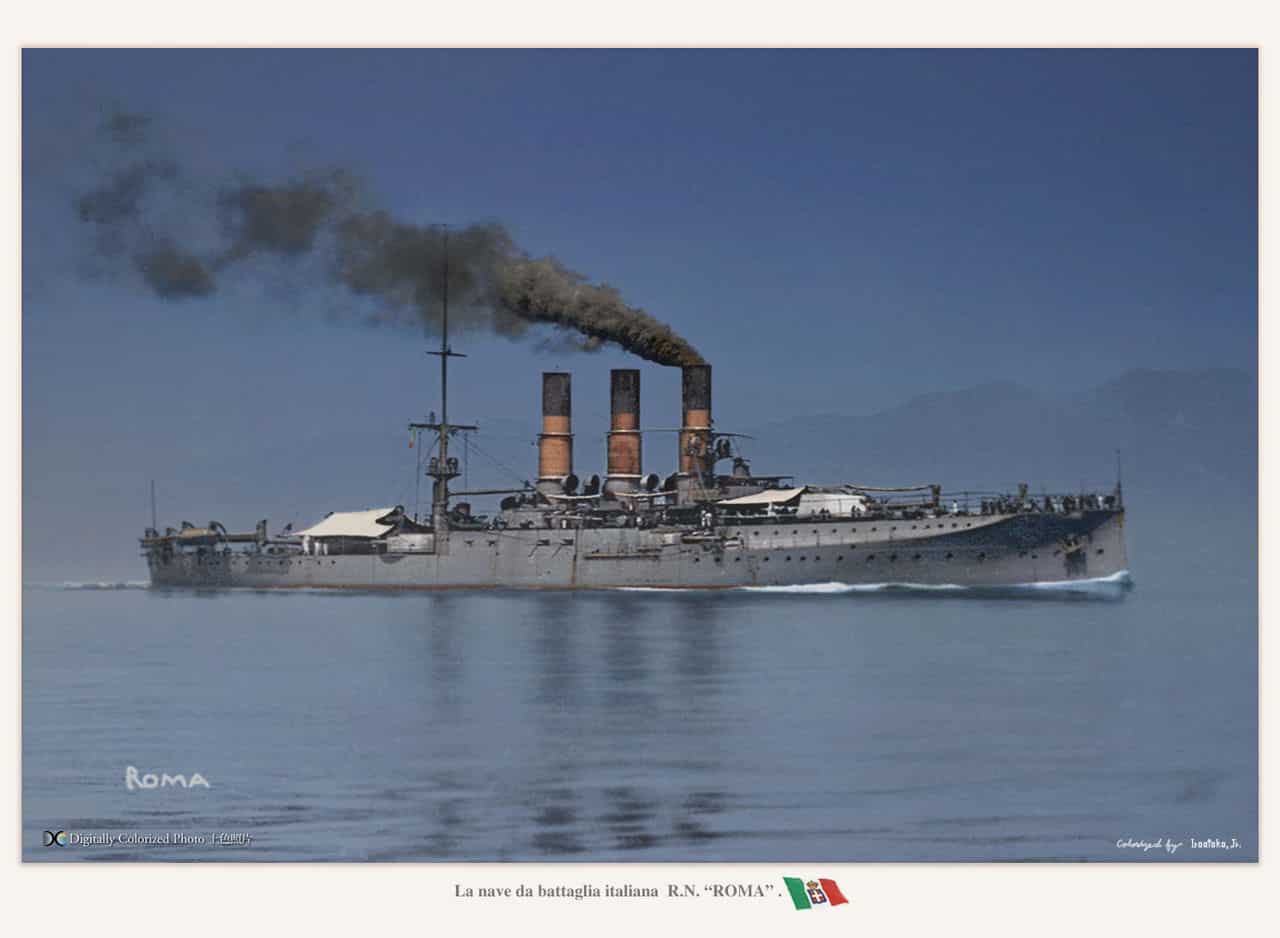
Roma, Regina Elena class battleships, colorized by Irootoko
Budgetary constraints
In 1894-95 reverses in Africa were still detrimental to the navy, and it would be necessary to wait for the ministry of navy Carlo Mirabello for a new ambitious plan to be voted. Funds were still modest though, and construction of new heavy units was affected not only by some tradeoffs but also delays of 7 years to 10 years between the first drawings and tests, which rendered obsolete these ships when entering service. However, they were distributed in homogeneous classes, and of certain quality.
Strategic Objectives
On a strategic level, Italy had to face the Turks, Greeks, Austrians, but its tonnage was largely able to face these three fleets, even combined. The Greeks never had serious enmities towards the Italians, and only possessed a modest coastal force. It was quite the opposite with the Ottoman Navy, once so powerful, which remains a threat for the whole Eastern Mediterranean, and the Black Sea. In the Adriatic, it was of course Austria-Hungary, Italy’s great rival. The Italians sought since Lissa to obtain reparation for the outrage they had sustained on the part of Rear Admiral Tegetthoff. However, this rivalry lost ground for political reasons, since Italy became been part of the triple entente in 1885 (Germany-Italy-Austria-Hungary).
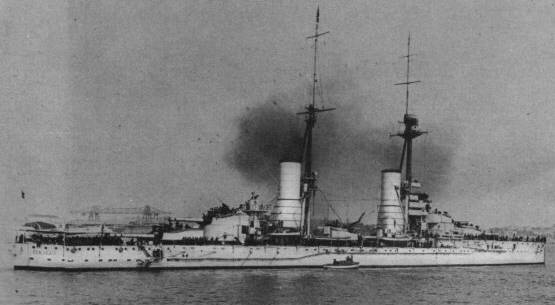
Battleship Caio Duilio in 1915
Rank in 1914
In 1914, Regia Marina (“Royal Navy”) was ranked seventh in the world, ahead of the Ottoman Empire, Austria-Hungary, the Armada (Spain) and the Dutch, but behind the French, Japanese, Russian, German, American and British fleets. She could count on paper 17 battleships, 32 cruisers, 33 destroyers, fifty torpedo boats and a handful of submersibles. However, of these forces, the oldest cruisers (1885), were too small no match for the speed of modern naval operations, while the oldest battleships has been retrograded as coastguards or even dockyards and depot ships of batteries or torpedo boats, being totally obsolete.
Second-class torpedo boats were not of national construction, but came from the three great specialists of the time: Vosper-Thornycroft in Great Britain, Normand in France, and Schichau in Germany. Its cruisers were fairly light for the most part, and apart from the San Giorgio (1911), were inferior in tonnage and armament to their equivalents in the other navies. Italy’s first Dreadnoughts on the other hand, begun a little late in relation to other Nations except Austria-Hungary, were quite modern and integrated triple turrets, like the contemporary American and Russians 2nd generation dreadnoughts.
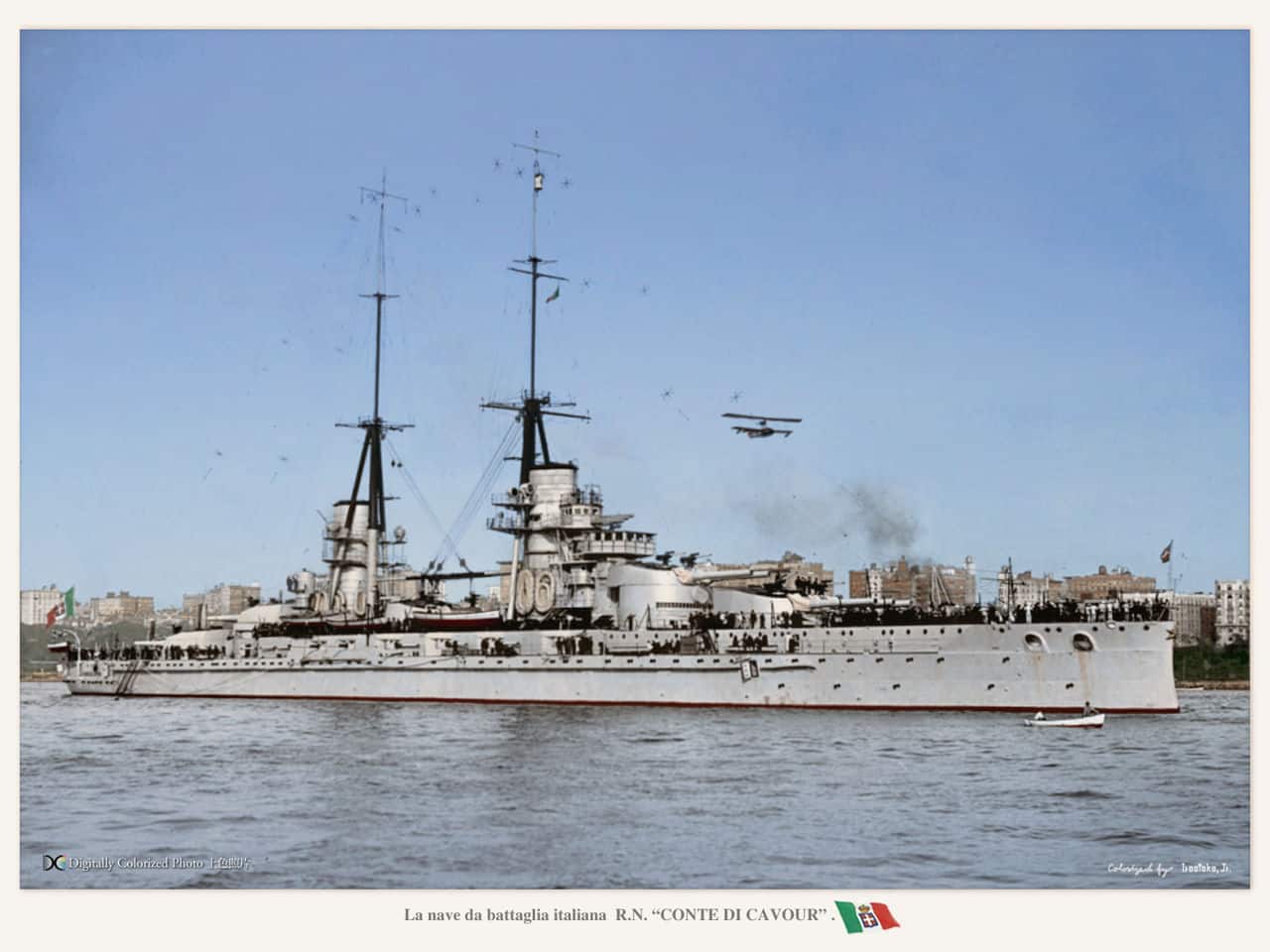
Conte di Cavour – colorized by Irootoko
*The magazine of Alfred Jane, a British subject, was complementary to the Brassey’s naval annual and well known in naval circles worldwide. Aside being directories of warships around the world, Jane’s was famous for its collection of articles related to tactics and naval strategy. Jane’s fighting ships had precise descriptions of the latest ships released, but also incorporated technical articles, including those of engineers of worldwide reputation like Cuniberti.
Battleships:
-Pre-dreadnoughts: Dandolo, Class Ruggiero di lauria (3) (coastal defense), Re Umberto (3), Amiraglio di Saint Bon (3), Regina Margherita (2), Regina Elena.
-Dreadnoughts: Dante Alighieri, class Cavour (3), 2 others in completion class Duilio and 4 super-dreadnoughts (See later. “war constructions”)
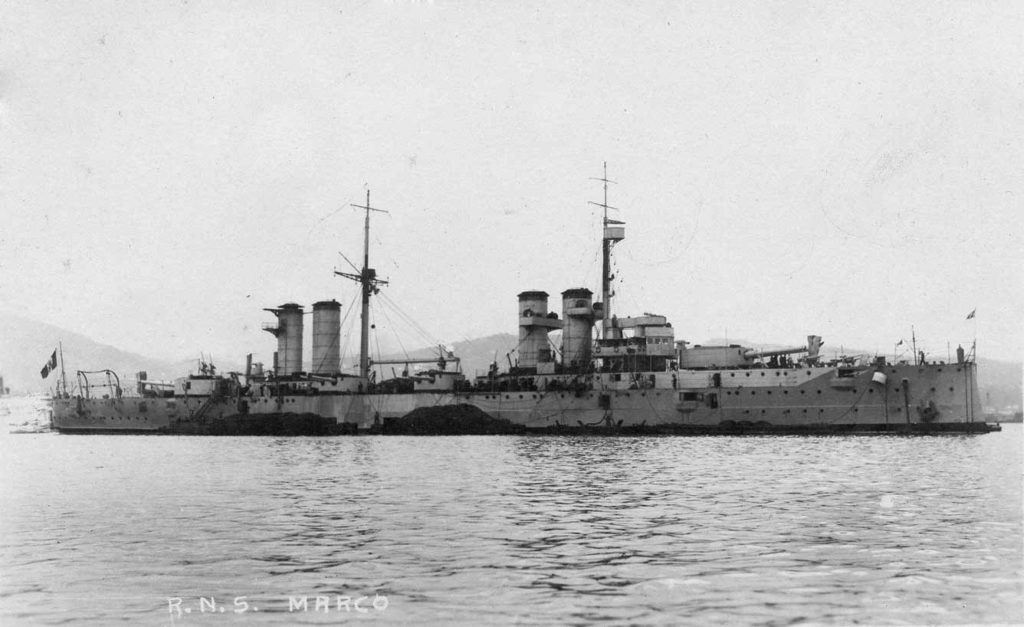
Armoured cruiser San Marco
Cruisers:
Armored cruisers: Marco Polo, class Vettor Pisani (2), class Garibaldi (3), class Pisa (2), Class San Giorgio (2).
Protected cruisers:, Piemonte, class Umbria (5), Calabria, Libia, 2 others under construction.
Minelayers: Partenope class and others (5)
Light cruisers: classes Agordat (2), Quarto, class Bixio (2).
Schoolship and GQG: Etna.
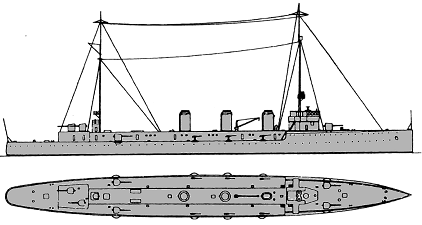
Italian cruiser Quarto
Destroyers: Fulmine, Lampo (6), Nembo (6), Soldati (10), Indomito (6), Ardito (2), Audace (2) classes.
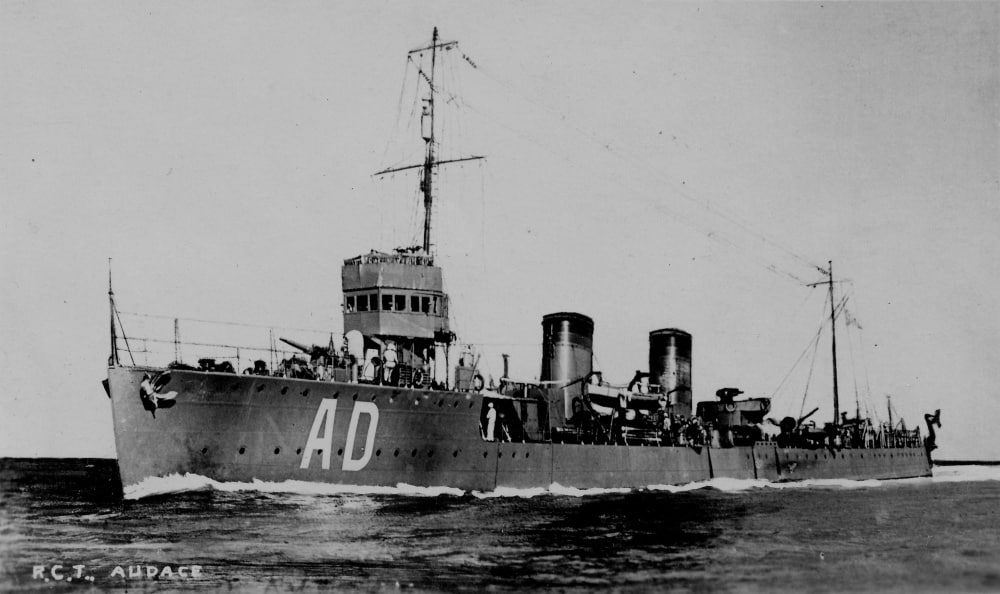
Destroyer Audace
High seas TBs: Sirio (6), Pegaso I (4), Condore, Pelicano, Gabbiano, Orione (4), Pegaso II (16), PN I (36), and 30 more under construction.
Coastal TBs Type Schichau (about 10).
Submarines: Delfino, Glauco (6), Foca, Medusa (6), Atropo, Nautilus (2), Pullino (2), Alfa (2).
Gunboats: Guardiano, Brondolo (2), Caboto.
Miscellaneous: -Floating batteries, floating HQ (Cruiser Giovanni Bausan)
Tonnage 1914:
|
Additional tonnage 14-18:
|
War Constructions:
Its war production is characterized mainly by a large use of light units: destroyers, submersibles, coastal bombardment gunboats, but above all a real horde of MAS torpedo boats (Motoscafi Anti Somergibli), widely used as anti- Submersibles, which infested the Adriatic and offered themselves with impunity sumptuous pictures of hunting. These torpedo-launching units, famous with their powerful engines, their light construction, added to the individual audacity, did wonder.
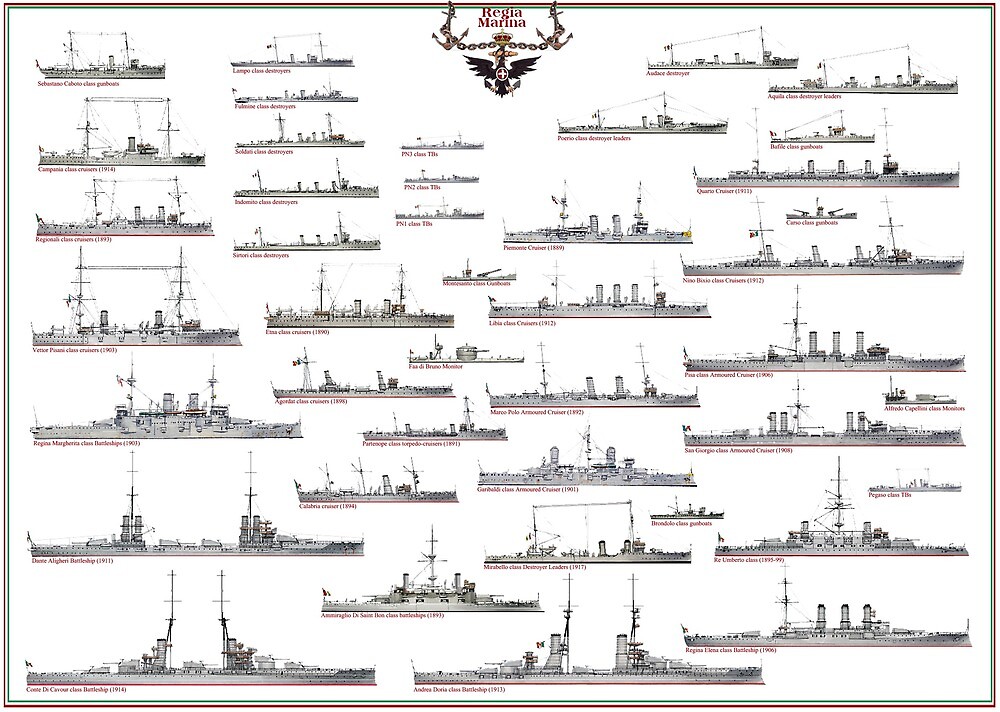
Battleships: -class Caio Duilio (2), 2 others under construction, class Caracciolo (never completed).
Cruisers: Light ships, scouts of the class Alessandro Poerio (3), Carlo Mirabello (3), Aquila (4), and at the end of the war, three others were started, class Leone. Too small as cruisers but well sized as destroyers, they are classified as such after the war.
Destroyers: class Pilo (8), Audace (ii), class Sirtori (4) class La Masa (10), others at the beginning of construction in 1918, class Palestro Class Curtatone (4).
Torpedo-boats: Coastal Type PN II and III (37).
Submarines: Class Provana (4), Class Micca (6), Argonauta, Class F (21), Class N (6), Class H (8), Class X (2).
Gunboats: 10 requisitioned or purchased (see “gunboats”), 4 others escort in project.
Miscellaneous: Dredgers of mines: Class RD (21 during the war, 30 others under construction)
-Monitors Alfredo Capellini, Faa’di Bruno, Montfalcone, Monte Cucco, Monte Santo (2), Vodice, Carso, Pasubio, Padus, and 4 Monte Grappa class yards.
-MAS torpedo torpedo boats (422 in all, more than 380 during the war).
-42 Auxiliary cruisers (armored steamers) of which 17 were sunk
-6 Armed yachts, 9 armed ones (Libya), Seaplane carrier Europa.
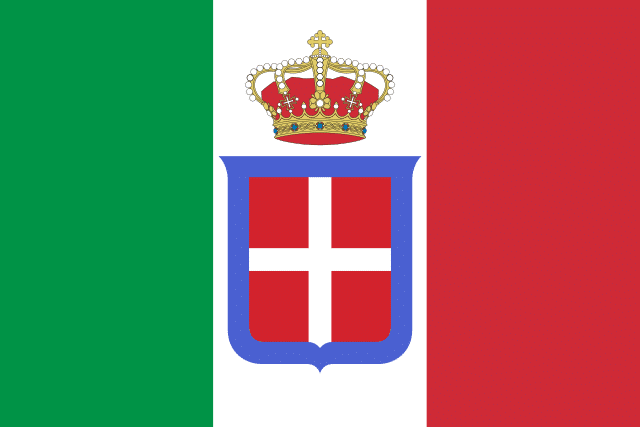
Italian Naval Ensign
The Regia Marina at war
Early Operations (1914-15):
The question deserves to be asked: What would have happened if Italy had definitely committed itself alongside the central empires? Indeed, in August 1914, his position was ambiguous. It had claims on the side of France (Nice, Savoy, Tunisia), but also on the side of its allied supposed neighbor, Austria-Hungary, for territories in the Alps and the Adriatic. When the Franco-British combined fleet entered the Adriatic, Admiral de Lapeyrere arranged to cross his fleet near the Italian coasts in order to act as a deterrent.
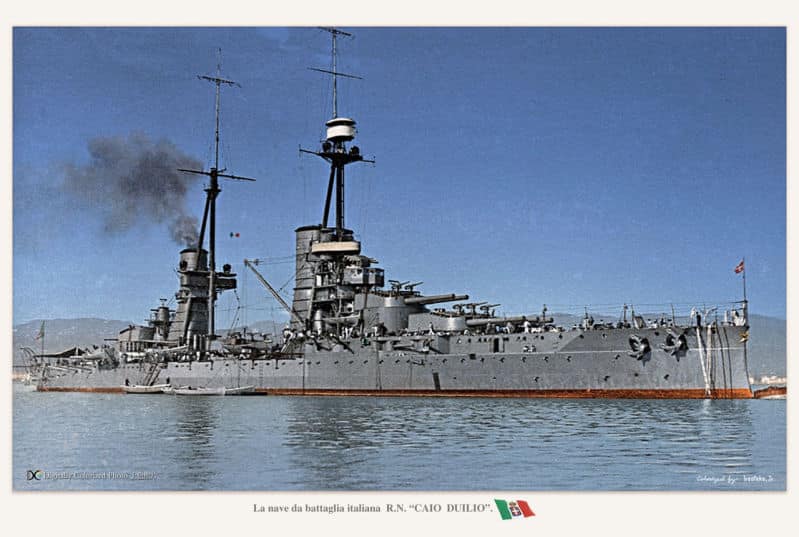
Colorized photo of the Caio Duilio, completed during the war
In terms of balance of forces, the involvement of the Italian navy alongside the Austro-Hungarian fleet was certainly difficult to manage for the allied forces present: Before the Dardanelles affair, the Royal Navy had on site only Of a handful of buildings (two battle cruisers, moreover quickly solicited in the Von Spee hunt in the Atlantic, and two cruisers-battleships, but not a single ship of line, even old). The French navy was entrusted with the command of naval operations in the Mediterranean, the Royal Navy reserving for itself the North Sea.
The weight of the Italian navy was numerically inferior to that of the French navy, but in 1915 the two combined fleets (Italy and Austria-Hungary) would have had 9 dreadnoughts as against 7 for the French, and there was no The possibility of the Royal Navy separating itself immediately from one of its precious dreadnoughts (which it did however by sending the Queen Elizabeth to the Dardanelles in 1915). In the case of “classical” battleships, the two fleets would have aligned 22 units against 23 for the French. As for cruisers finally, they would have aligned 35 against 36 to France.
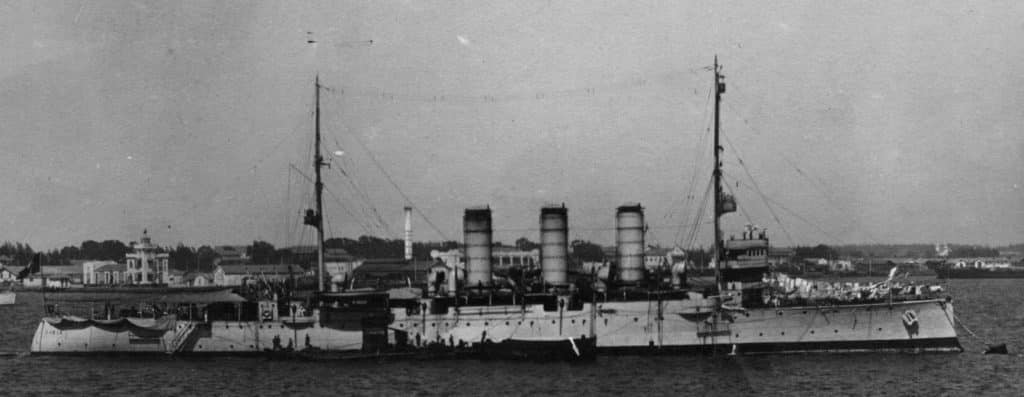
Cruiser Libia
As we can see, the forces were comparable, and the former had the disadvantage of having to coordinate their actions. However, this question was settled by a secret treaty concluded in London between the triple agreement and Italy on 26 April 1915. The latter offered to Italy in exchange for its engagement alongside the allies of the territories in the Adriatic and the Balkans, Taken to Austria-Hungary and Turkey.
President of the council Antonio Salandra had rather neutral views as the majority of the population, despite the demonstrations of nationalists carried by the poet Gabriel d’Annunzio, or Mussolini who militate to take back the “irreverent lands”. The secret treaty comes to the public at the same time as a denunciation of the triple entente on May 3 and Salandra saw his government overthrown by the parliament.
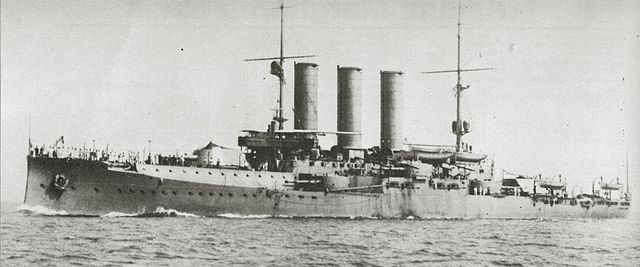
Battleship Vitorrio Emanuele
King Victor-Emmanuel, favorable to the war, recalled him. On May 24, 1915, Italy committed itself definitively by declaring war on Austria-Hungary. The navy was then largely involved during the conflict against an enemy located on the eastern coast of the Adriatic, which conducted limited operations due to its manifest numerical inferiority. There was never a real battle between the two fleets, except skirmishes and some punctual clashes, as well as isolated actions by individuals and small crafts but of spectacular results.
In the absence of a decisive confrontation, the Italian admiralty fell on submersibles and small crafts, especially relying on light units of the MAS type, of which they made considerable use. The mine warfare was also a priority, and the many “RD” type are there to testify of its importance. Numerous attempts were made to force Pola harbour.
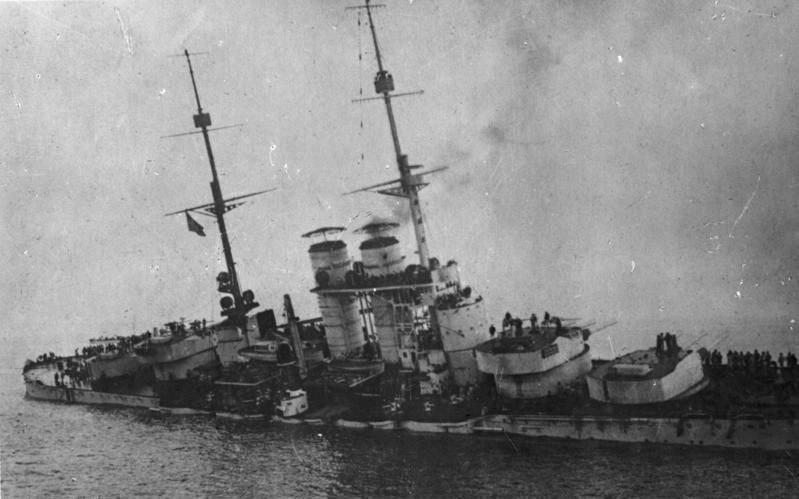
Battleship Szent István sinking after a MAS attack
Late operations 1916-18
The project of blasting the Habsburg fleet was a veritable manifesto of individual bravery and recklessness. Passing by in particular the heavy nets of steel mesh through the passes required the construction of singular machines like the tracked “Grillo”, a kind of equivalent naval response to the problem of barbed wire for the infantry, which led to tanks. By virtue, the were also the first amphibious “tanks” used in action, although they should be more assimilated to boats. See “boats or tanks? -The Grillo machines”
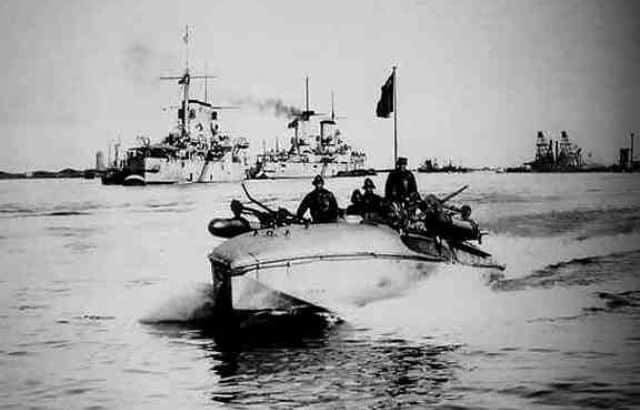
Italian MAS BMTs at sea. Their successes led to more constructions in ww2.
Finally, the Italian navy made great use of “monitors”, especially at the end of the war. Some of them were real battleships, such as Faà di Bruno, equipped with the Carracciolo cannons (after its construction has been halted), others were simple pontoons, or barges, equipped with heavy artillery. They bombed coastal installations but also supported the Italian troops on the front line, near the coast.
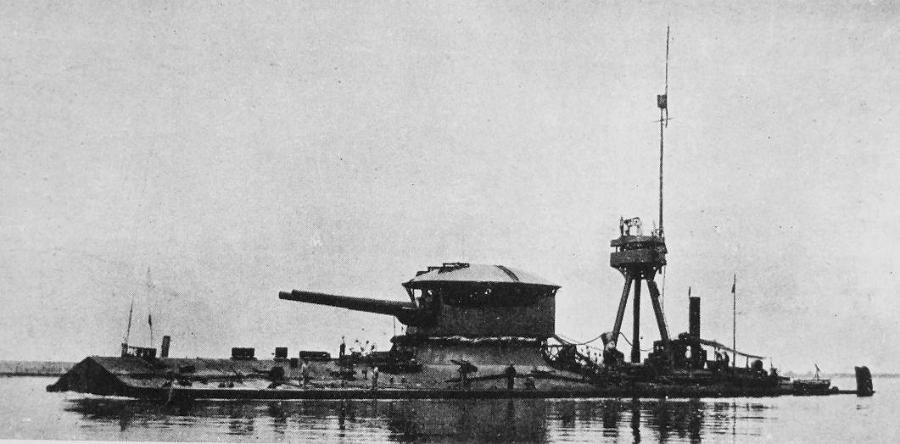
Monitor Faa di Bruno, 1917
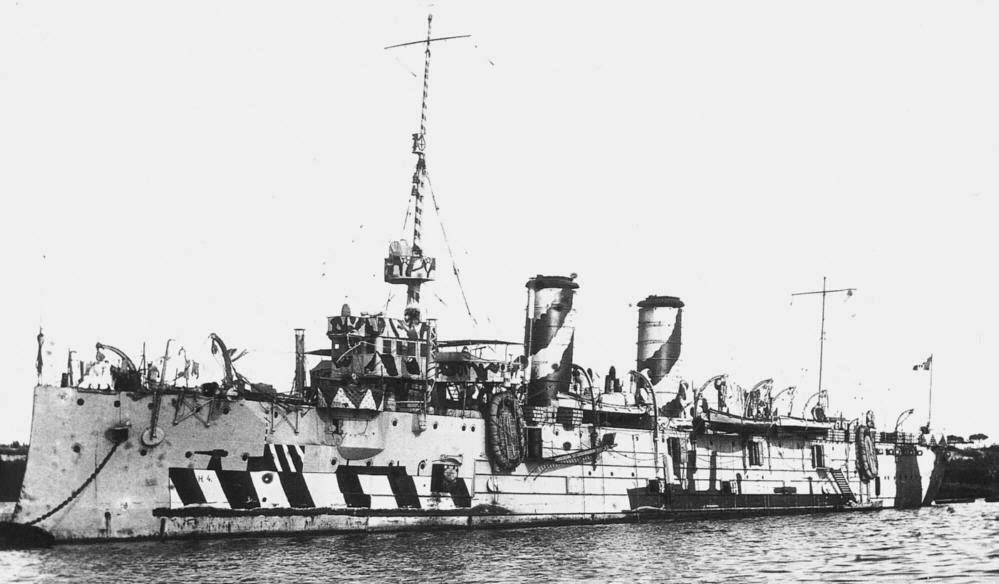
Cruiser Marco Polo, 1918
Classes Detail
Italian WWI Battleships
Italian Naval Aviation
-Macchi L.1/2 – biplane flying boat (1915-16)
-Macchi M.3 – two/three-seat flying boat (1916)
-Caproni Ca.39/43 – prototype bomber floatplane (1917)
-Caproni Ca.47 – bomber floatplane (late 1917)
-Macchi M.4 – flying boat (1917)
-Macchi M.5/6 – fighter flying boat (1917)
-SIAI S.8 – two-seat reconnaissance flying boat (1917)
-Macchi M.7 – fighter flying boat (1918)
-Macchi M.8/9/12 – reconnaissance/bomber flying boat (1917-18)
-SIAI S.9 – reconnaissance flying boat (1918)
-SIAI S.12 – reconnaissance bomber flying boat (1918)
links/sources
//en.wikipedia.org/wiki/Regia_Marina”
Italian Naval warfare 1915-18
Naval deployment 1914-15
//en.wikipedia.org/wiki/Naval_warfare_in_the_Mediterranean_during_World_War_I Naval warfare in the mediterranean
//en.wikipedia.org/wiki/List_of_battleships_of_Italy List of Italian battleships
Marine Italienne Archives
http://www.hisutton.com/Mignatta.html
Conway’s All warships of the world 1860-1905 and 1906-1922.
 Latest Facebook Entry -
  X(Tweeter) Naval Encyclopedia's deck archive
 Instagram (@navalencyc)


 French Navy
 Royal Navy
 Russian Navy
 Armada Espanola
 Austrian Navy
 K.u.K. Kriegsmarine
 Dansk Marine
 Nautiko Hellenon
 Koninklije Marine 1870
 Marinha do Brasil
 Osmanlı Donanması
 Marina Do Peru
 Marinha do Portugal
 Regia Marina 1870
 Nihhon Kaigun 1870
 Preußische Marine 1870
 Russkiy Flot 1870
 Svenska marinen
 Søværnet
 Union Navy
 Confederate Navy
 Armada de Argentina
 Imperial Chinese Navy
 Marine Haitienne
 Marinha do Portugal
 Mexico
 Kaiserliche Marine
 1898 US Navy
 Argentina
 Brazil
 Chile
Chile Cuba
Cuba Peru
Peru Bulgaria
 Denmark
 Greece
 Netherlands
 Norway
 Portugal
 Romania
 Sweden
 China
China Thailand
 Sovietskiy Flot
 Royal Canadian Navy
 Royal Australian Navy
 RNZN Fleet
 RIN Fleet
 Chinese Navy 1937
 Kriegsmarine
 Chilean Navy
 Danish Navy
 Finnish Navy
 Hellenic Navy
 Polish Navy
 Romanian Navy
 Turkish Navy
 Royal Yugoslav Navy
 Royal Thai Navy
 Minor Navies
 Albania
 Austria
 Belgium
 Columbia
 Costa Rica
 Cuba
Cuba Czechoslovakia
 Dominican Republic
 Haiti
Haiti Hungary
 Honduras
 Estonia
 Iceland
 Eire
Eire Equador
 Iran
Iran Iraq
Iraq Latvia
 Liberia
 Lithuania
 Mandchukuo
 Morocco
 Nicaragua
 Persia
 San Salvador
 Sarawak
 Uruguay
 Venezuela
 Zanzibar
 Warsaw Pact Navies
 Bulgaria
 Hungary

 Bundesmarine
 Dutch Navy
 Marina Militare
 Yugoslav Navy
 Chinese Navy
 Indian Navy
 Indonesian Navy
 JMSDF
JMSDF North Korean Navy
 Pakistani Navy
 Philippines Navy
 ROKN
ROKN Rep. of Singapore Navy
 Taiwanese Navy
 Vietnam People’s Navy
 IDF Navy
 Saudi Navy
 Royal New Zealand Navy
 Egyptian Navy
 South African Navy


 Ukrainian Navy