
Presentation
At the forefront is the United Kingdom, second only to France, and in third place the Spanish fleet in a way that has barely changed since the end of Napoleonic wars… Russia was at that time, a match for the Turkish fleet, but certainly not against a combined Franco-British squadron.
1854: Review at the start of the Crimean War:
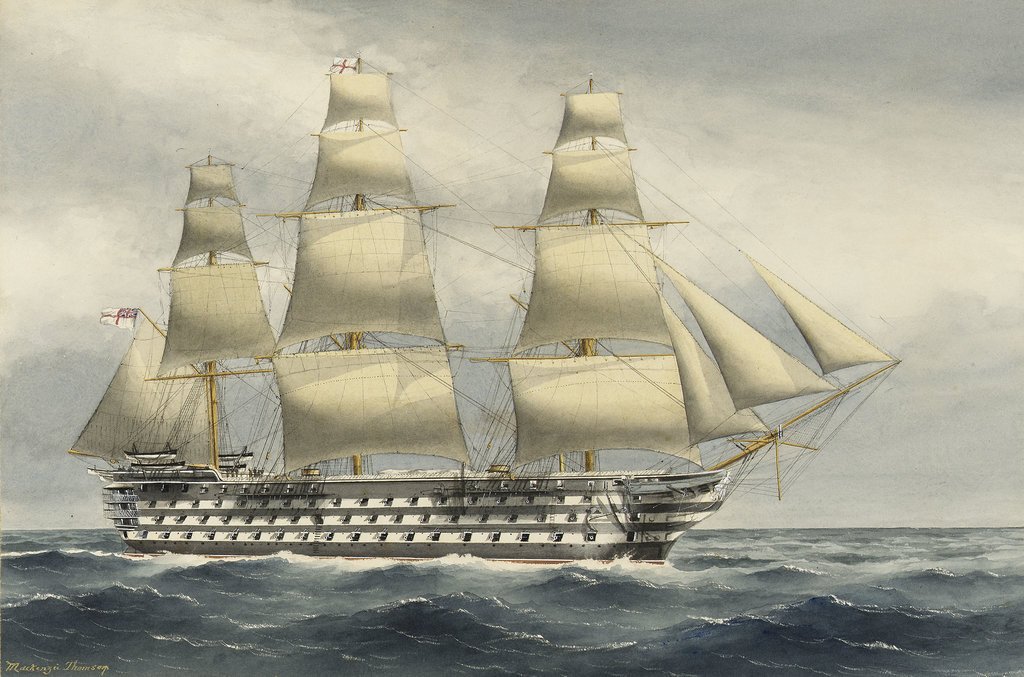
Russian Imperial Navy in 1854
French imperial Navy 1854
Royal Navy 1854
Ottoman Imperial Navy 1854
1861: The Secession War.
That conflict raged during four years and seen naval combats as well as riverine battles, and many military improvements and new concepts put to the test. The disproportion of naval forces in favor of the Union is obvious. Nonetheless, the two fleets dealing with different priorities are interesting by the units they built and operated during the conflict:
Union fleet
Confederate fleet
1865: The Austro-Italian war
The Battle of Lissa highlights the usefulness of the spur resulting from the vessels propulsion, and as subsequent renewal of antiquity tactics and general flavor. This section focuses on the potential of the fleets of its two belligerents at the beginning of the conflict. An aging, multicultural empire, and a dashing new nation, who recently gets its independence and will innovate in naval architecture and design under the new name of Regia Marina. On the Austro-Hungarian side this victory fuelled the will to built a large navy, although sized to the Adriatic sea, which was done in the 1880-1890s. Note: The battle of Lissa comprises a complete review of both navies.
Austro-Hungarian empire
Combined Italian Navies
1870: The Ironclad era & the Franco-Prussian war
An era defined by the launching of the French Gloire and the British Warrior which led the way for all other European nations, and the Franco-Prussian War surged as the key moment for both the French and German histories. On the latter side, this was the unification of German states inherited from the Holy Roman Empire into a single unified Empire under the iron will of Prussian politician Otto Von Bismarck, and on the French side, the definitive end of the Empire and the Republic firmly implanted for the next 200 years (as well as the commune, the first proletarian revolution).
The naval forces in this played a little part, but the state of the navies of the time is a good screenshot of what will come. Fleets are ranked in order of importance. The only “naval battle” which occurred was the duel between the gunboats Komet and Courbet off the South American coast, which ended as a draw.
French imperial navy in 1870
Next: Prussian Navy 1870
Grand review of world’s 1870 Fleets :
Russian imperial Navy
Japanese imperial navy
Royal navy
United States Navy in 1870 (‘old navy’)
Regia Marina in 1870
Spanish Armada in 1870
Dutch Royal navy in 1870
Ottoman imperial navy in 1870
Chinese imperial navy in 1870
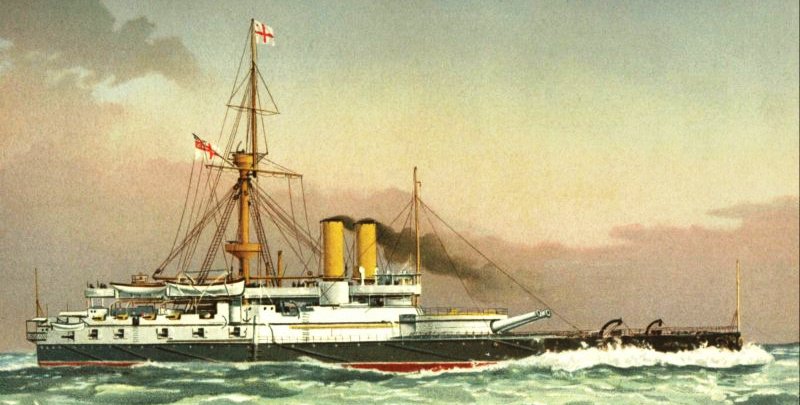
Three fleets are then nominated for the colonial control of Africa. Steam definitely replaced sail, turrets have supplanted batteries, destroyers, submarines and mines appeared. Dramatic sea warfare changes are on the way, a new diplomatic order is building on the world chessboard.
French Navy 1890
Royal Navy 1890
1894: The Sino-Japanese War :
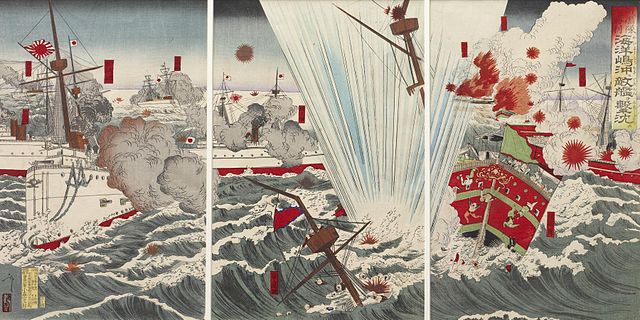
First – (the second comes in 1937), sees clash of ships still rely on technology and Western expertise. The success of Japan at the battle of Yalu, far from certain at the start, earned the empire a model of commitment to Britain, while cultivating its difference and overall confident about its superiority in Asia.
Japanese imperial navy 1894
Chinese imperial navy 1894
1898: The Spanish-American War
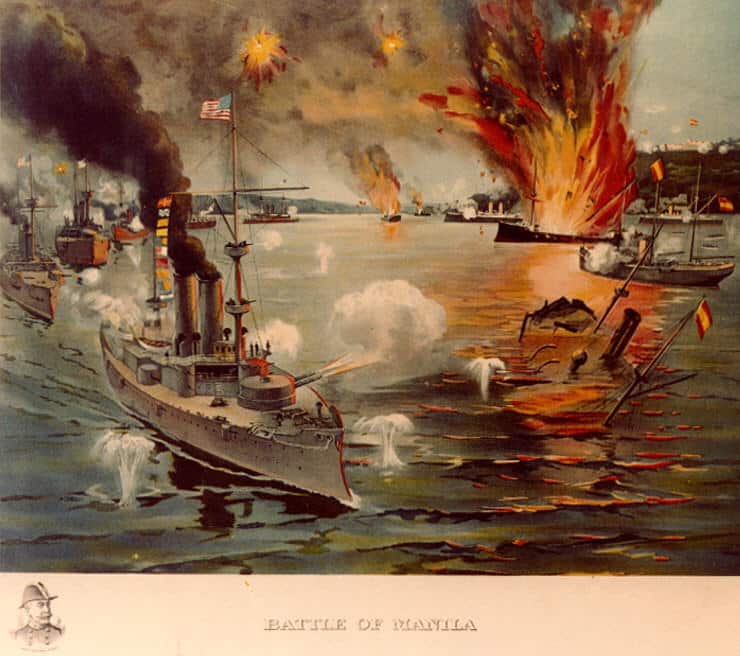
In “splendid little war”, largely due to Teddy Roosevelt expansionism will, the American casus belli came as an excuse to help the insurgents to free Cubans from the old Hispanic rule, starting from the accidental explosion of the USS Maine, well exploited by press. This gave the battle of Santiago de Cuba, and later the battle of Manila bay, in the Spanish-held Philippines. In two battles, the still young and freshly reconstituted US navy decisively defeated a Spanish fleet almost without loss, despite superior forces, although made up of obsolete ships and victims of the defensive choices of their commander, helped by US deception and surprise alike.
-Spanish Armada
-United States Navy
1905: The Russo-Japanese War
This war was at the same time the first confrontation of modern battleships and the last were they fought in the old style. The battle of Tsushima also was an earth-shaker event, that boosted Japanese ambitions (and explains the Pacific war in 1941-45) and the first nail in the coffin of the Russian Empire (and the revolution and USSR, the cold war). In 1906, dreadnoughts required rethinking the concepts of naval warfare in terms of speed rather than firepower. We take the opportunity to make a general assessment of fleets at that time:
Belligerents :
-Russian imperial Navy 1905
-Japanese imperial navy 1905
Other fleets of 1905 :
-Royal navy
-French republican navy
-Imperial German navy
-United States Navy
-Italian kingdom
-Spanish Armada
-Dutch Royal navy
-Ottoman imperial navy
-Chinese imperial navy
 Latest Facebook Entry -
  X(Tweeter) Naval Encyclopedia's deck archive
 Instagram (@navalencyc)


 French Navy
 Royal Navy
 Russian Navy
 Armada Espanola
 Austrian Navy
 K.u.K. Kriegsmarine
 Dansk Marine
 Nautiko Hellenon
 Koninklije Marine 1870
 Marinha do Brasil
 Osmanlı Donanması
 Marina Do Peru
 Marinha do Portugal
 Regia Marina 1870
 Nihhon Kaigun 1870
 Preußische Marine 1870
 Russkiy Flot 1870
 Svenska marinen
 Søværnet
 Union Navy
 Confederate Navy
 Armada de Argentina
 Imperial Chinese Navy
 Marine Haitienne
 Marinha do Portugal
 Mexico
 Kaiserliche Marine
 1898 US Navy
 Argentina
 Brazil
 Chile
Chile Cuba
Cuba Peru
Peru Bulgaria
 Denmark
 Greece
 Netherlands
 Norway
 Portugal
 Romania
 Sweden
 China
China Thailand
 Sovietskiy Flot
 Royal Canadian Navy
 Royal Australian Navy
 RNZN Fleet
 RIN Fleet
 Chinese Navy 1937
 Kriegsmarine
 Chilean Navy
 Danish Navy
 Finnish Navy
 Hellenic Navy
 Polish Navy
 Romanian Navy
 Turkish Navy
 Royal Yugoslav Navy
 Royal Thai Navy
 Minor Navies
 Albania
 Austria
 Belgium
 Columbia
 Costa Rica
 Cuba
Cuba Czechoslovakia
 Dominican Republic
 Haiti
Haiti Hungary
 Honduras
 Estonia
 Iceland
 Eire
Eire Equador
 Iran
Iran Iraq
Iraq Latvia
 Liberia
 Lithuania
 Mandchukuo
 Morocco
 Nicaragua
 Persia
 San Salvador
 Sarawak
 Uruguay
 Venezuela
 Zanzibar
 Warsaw Pact Navies
 Bulgaria
 Hungary

 Bundesmarine
 Dutch Navy
 Marina Militare
 Yugoslav Navy
 Chinese Navy
 Indian Navy
 Indonesian Navy
 JMSDF
JMSDF North Korean Navy
 Pakistani Navy
 Philippines Navy
 ROKN
ROKN Rep. of Singapore Navy
 Taiwanese Navy
 Vietnam People’s Navy
 IDF Navy
 Saudi Navy
 Royal New Zealand Navy
 Egyptian Navy
 South African Navy


 Ukrainian Navy