
 United Kingdom (1843)
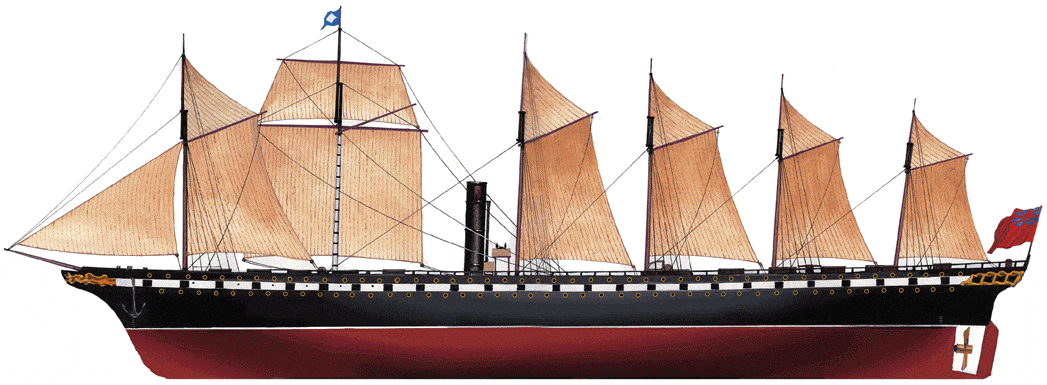
Brunel’s industrial age marvel
SS Great Britain was one of the most famous ships in history. It was the first all-iron large oceanic liner, although not truly the first screw steamer: The “prototype” was indeed the little HMS Archimedes, developed around the idea of the original screw of archimedes. It was launched in 1838 and in 1840 had already carried out some cruises, proving the concept. Star engineer Isambard K. Brunel, designer of the Great Western Railway, was convinced by Richard Guppy, who had borrowed this ship, to equip his proposed Great Britain with a propeller instead of paddles.
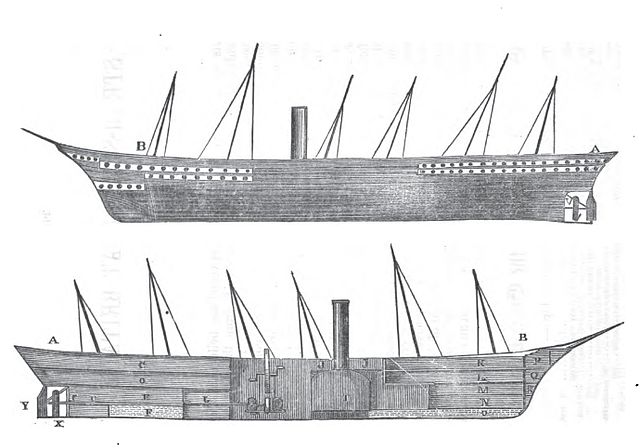
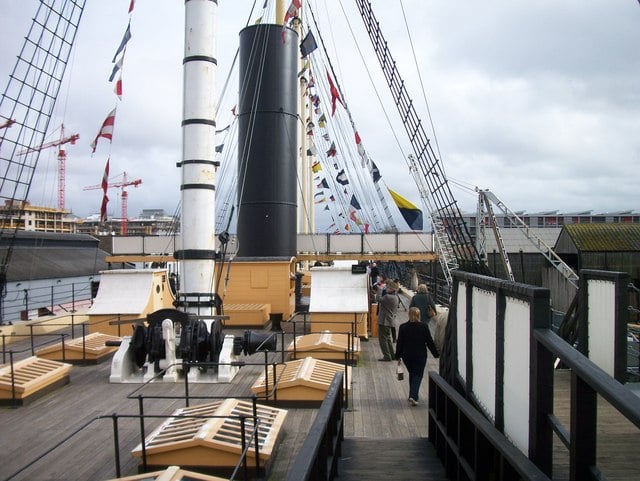
Brunel bought the Archimedes in order to experiment it, then opted for this revolutionary mode of propulsion for his great steamer. Brunel wanted the Great Britain to be the best ship of the kind ever built, and size was also a solution to reduce the ship’s rolling, improve passengers comfort. With 98 meters and 3500 tons she became indeed also the biggest ship afloat at its launch. She was chartered by the company created by Brunel in 1836 and was already operating the for Great Western Ship Co. Finished and armed in London, she was ready in 1845 for here inaugural cruise to New York. The round trip took 14 and 15 days, which was relatively slow.
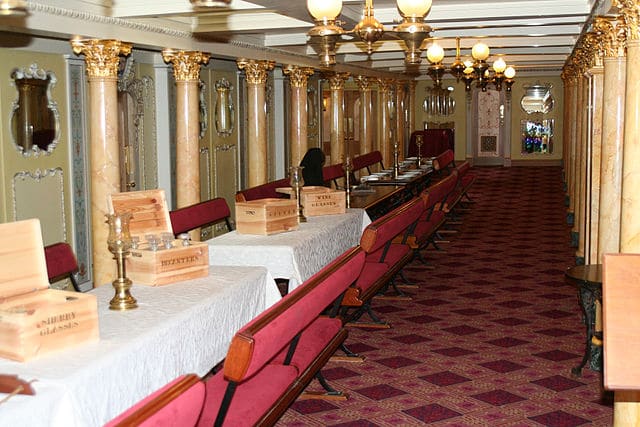
1st class dining room
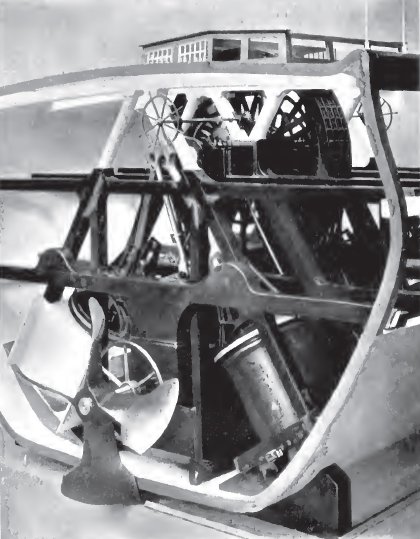
Model of the steam engines
Service
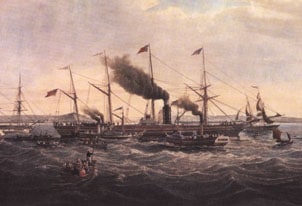
On her return, she broke her propeller and finished under sails. This unfortunate accident stopped her, but the great ship was back in 1846. On the night of 22-23 September she ran aground in Dundrum Bay between Belfast and Dundalk, and remained prisoner of tide, where Many curious came to see her laying like a dead whale (a painting was made of the event). This new incident paralyzed her for a long time and ruined the Great Western Ship Co.
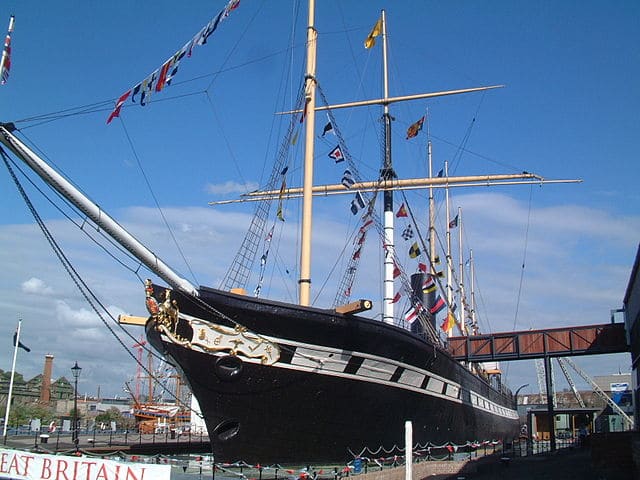
She was finally towed to Liverpool and resold in 1850 to Gibbs, Bright & amp; Co. which made profound changes: New screw, new machines, less powerful, with two chimneys, sail surface reduced to four masts, but taller, so much so that the advertising brochure of the time which praised its merits, spoke of a “Steam clipper”. After her inaugural trip to Australia, she made 32 trips to this continent before returning to the prestigious Atlantic line.
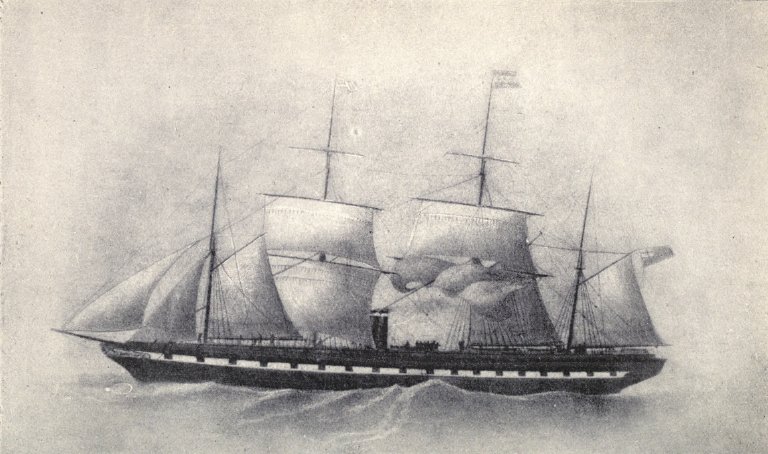
In 1882, she was bought by A. Gibbs and modified again. Machines were removed, rig was reduced to three masts and she became a pure sailboat. A storm hit her at Cape Horn and she had to take refuge in the Falklands, waiting to find a new buyer. Finally, she was stripped of her masts and served locally for long as a coal depot.
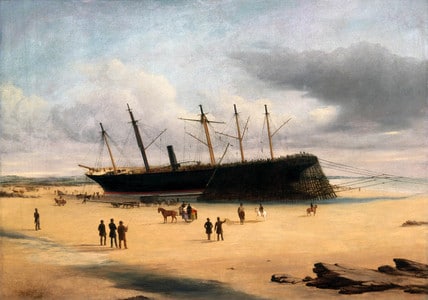
Stranded at Dundrum Bay
But her career did not stopped there: In 1933, after having been used to stock also bales of wool from Argentina, the former big steamer was no more than an anonymous, rusty hull. Left over to rot, one of its moorings dropped in 1937 and the unfortunate ship was dropped on the coast, at Sparrow Cove. She was recognized, raised and eventually carried by a barge in 1970, and then transported back to Bristol. After intense repairs and reconstruction efforts, SS Great Britain is now currently showcased to the public, in very the same dockyard where where she was built.
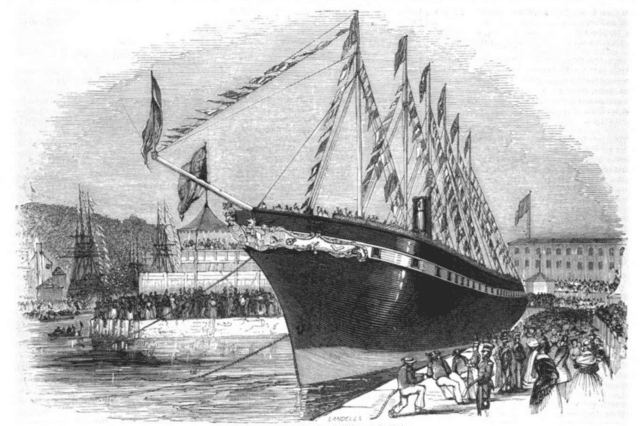
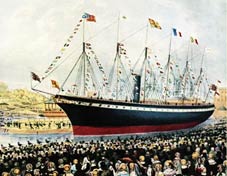
Launch at Bristol, 1843
Caracteristics :
- Displacement: 3500 tonnes
- Dimensions: 98 x 15,2 x 6,5 m (PP length, width, waterline).
- Propulsion 1 screw, one 4-cylinders, 500 hp.
- Speed 10 knots.
 Latest Facebook Entry -
  X(Tweeter) Naval Encyclopedia's deck archive
 Instagram (@navalencyc)


 French Navy
 Royal Navy
 Russian Navy
 Armada Espanola
 Austrian Navy
 K.u.K. Kriegsmarine
 Dansk Marine
 Nautiko Hellenon
 Koninklije Marine 1870
 Marinha do Brasil
 Osmanlı Donanması
 Marina Do Peru
 Marinha do Portugal
 Regia Marina 1870
 Nihhon Kaigun 1870
 Preußische Marine 1870
 Russkiy Flot 1870
 Svenska marinen
 Søværnet
 Union Navy
 Confederate Navy
 Armada de Argentina
 Imperial Chinese Navy
 Marine Haitienne
 Marinha do Portugal
 Mexico
 Kaiserliche Marine
 1898 US Navy
 Argentina
 Brazil
 Chile
Chile Cuba
Cuba Peru
Peru Bulgaria
 Denmark
 Greece
 Netherlands
 Norway
 Portugal
 Romania
 Sweden
 China
China Thailand
 Sovietskiy Flot
 Royal Canadian Navy
 Royal Australian Navy
 RNZN Fleet
 RIN Fleet
 Chinese Navy 1937
 Kriegsmarine
 Chilean Navy
 Danish Navy
 Finnish Navy
 Hellenic Navy
 Polish Navy
 Romanian Navy
 Turkish Navy
 Royal Yugoslav Navy
 Royal Thai Navy
 Minor Navies
 Albania
 Austria
 Belgium
 Columbia
 Costa Rica
 Cuba
Cuba Czechoslovakia
 Dominican Republic
 Haiti
Haiti Hungary
 Honduras
 Estonia
 Iceland
 Eire
Eire Equador
 Iran
Iran Iraq
Iraq Latvia
 Liberia
 Lithuania
 Mandchukuo
 Morocco
 Nicaragua
 Persia
 San Salvador
 Sarawak
 Uruguay
 Venezuela
 Zanzibar
 Warsaw Pact Navies
 Bulgaria
 Hungary

 Bundesmarine
 Dutch Navy
 Marina Militare
 Yugoslav Navy
 Chinese Navy
 Indian Navy
 Indonesian Navy
 JMSDF
JMSDF North Korean Navy
 Pakistani Navy
 Philippines Navy
 ROKN
ROKN Rep. of Singapore Navy
 Taiwanese Navy
 Vietnam People’s Navy
 IDF Navy
 Saudi Navy
 Royal New Zealand Navy
 Egyptian Navy
 South African Navy


 Ukrainian Navy