ITALIAN GTs

Gran Turismo, avanti!

The peninsula, with once the most eminent artists on the planet, also exercised its talents in the carrozeria (or bodywork), gifts passed through generations since the Renaissance, and equal mechanical prowesses, as evidenced by the enchanting, symphonic and Latin caracter of its engines. Of course there are Ferrari, Alfa Romeo, Lamborghini, Maserati, Iso Rivolta, Abarth, De Tomaso, but how many others have embarked on the adventure. Of all the Latin nations of the old continent, Italy is The most possessed by the demon of speed. The great classics from the 1930s to the 1960s, exceptional drivers, mythical races, forged the eternal glory of Transalpine motorsport. Since the 60s this golden age has passed, or somewhat declined, but creativity is always present, as evidenced by this page.

Read Also:


https://dbodesign.com/granturismo-design.com/OLD/pages/italie/italie.htm 166 Inter Touring Berlinetta
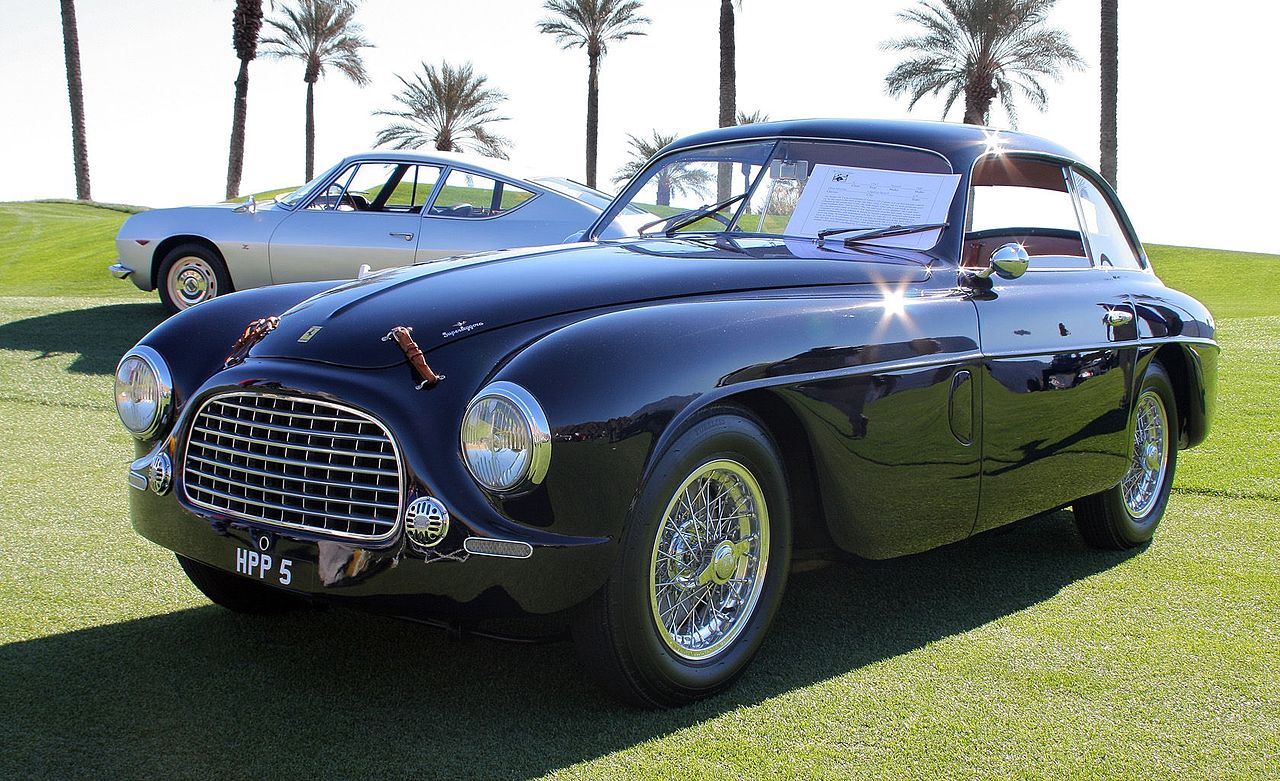
Ferrari 166 Inter Touring Berlinetta. The 1950/60s were the golden age for Italian GTs
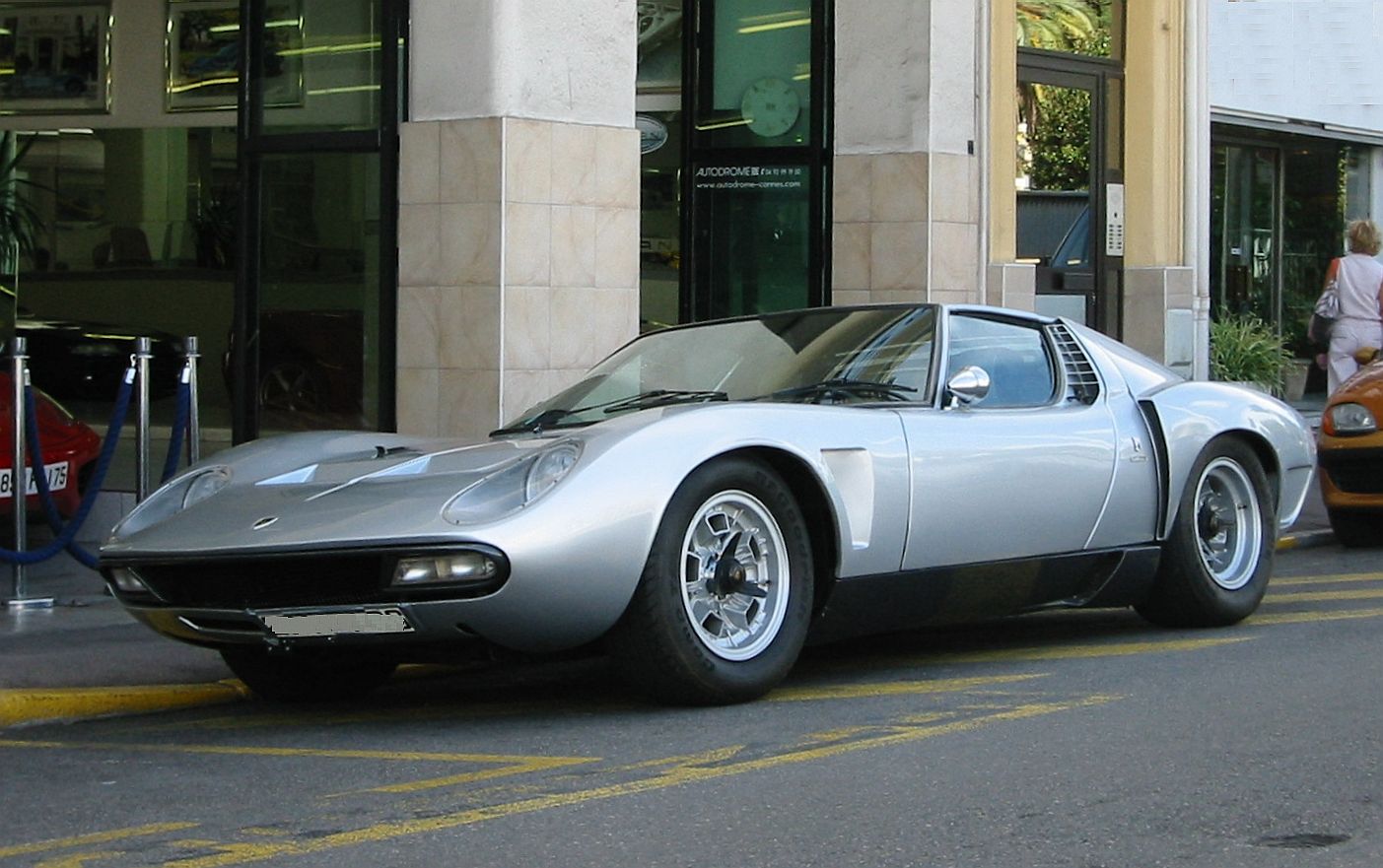
Miura
The Lamborghini Miura was quite a revolutionary sportscar, first Lambo with a central engine, and a bit of a "rebel" in a company that despised racing.

Italian Sportcars

Brands

Abarth Alfa-Romeo De Tomaso Ferrari Fiat Intermecanicca Iso-Rivolta Lamborghini Lancia Maserati

Others

  • ASA 1000 GT
  • ATS 2500 GT
  • Autobianchi A112 Abarth Pininfarina
  • Bandini Bialbero
  • B-Engineering Edonis
  • Bizzarini: GT Strada, 1500, Europa
  • Cistalia 202
  • Cizeta Moroder V16T
  • Conrero 2000
  • Ermini 1100
  • Ghia: Asymetrica, Dual Ghia II (L 6.4), 1500 GT, 230s, 450 SS.
  • Giannini 500, Torino super uno
  • Giaur 750
  • Gilco 750
  • Innocenti 950 coupé 1967
  • Isotta Fraschini Tipo 8 limousine 1930, Monterosa Coupé Touring 1947, T8 1996
  • Italdesign Nazca
  • LMX-Sirex Scaglione 1968
  • Modulo
  • Moretti 750
  • Nardi-Danese 2L 1950
  • Osca: MT4, 750, 1600 GT, 2500 GT.
  • Osi 20M TS
  • Paganelli 1.8L spider
  • Pagani Zonda C12
  • Puma 248
  • Siata: Daina, 208s (V8) coupé, roadster.
  • Stanga 750
  • Stanguellini 750
  • Zagato Hyena
-Abarth:
-Alfa-Romeo
-ASA 1000/2500 GT
-Autobianchi: 112 Abarth Pininfarina
-Bandini Bialbero
-B-Engineering Edonis
-Bizzarini GT Strada, 1500, Europa.
-Cistalia 202
-Cizeta Moroder V16T
-Conrero 2000
-De Tomaso
-Ermini 1100
-Ferrari
-Fiat
-Ghia Asymetrica, Dual Ghia II (L 6.4), 1500 GT, 230s, 450 SS.
-Giannini 500, Torino super uno
-Giaur 750
-Gilco 750
-Innocenti 950 coupé 1967
-Intermecanicca
-Iso-Rivolta: page spéciale
-Isotta Fraschini Tipo 8 limousine ( prestige ) 1930, Monterosa Coupé Touring 1947, T8 1996
-Italdesign Nazca
-Lamborghini
-Lancia
-LMX-Sirex Scaglione 1968
-Maserati
-Modulo
-Moretti 750
-Nardi-Danese 2L 1950
-Osca MT4, 750, 1600 GT, 2500 GT.
-Osi 20M TS
-Paganelli 1.8L spider
-Pagani Zonda C12
-Puma 248
-Siata Daina, 208s (V8) coupé, roadster.
-Stanga 750
-Stanguellini 750
-Zagato Hyena

ALFA - ROMEO


The magnificent 1937 8C 2900 Tipo B
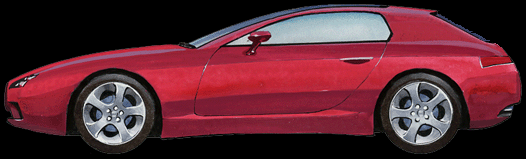
The famous "four-leaf clover" brand, established in 1915, would become one of Italy's most legendary marques—predating even Ferrari. Its pre-war models were costly and stunning, clad in the famous "Rosso" (red) that became the signature color for Italian sports cars and racing machines. Models produced up until 1985 bore distinctive names derived from their engine specifications, indicating the number of cylinders and total displacement in cubic centimeters. Alfa always cultivated a sporty image without claiming to be exclusively a sports car specialist; it offered sensible road cars right from the start. Nevertheless, it maintained the image of a mainstream manufacturer producing "dynamic" vehicles that inspired genuine passion among its aficionados. It continues to nurture this spirit with its current lineup, unveiling enticing concept cars at every auto show—beautifully styled by designers like Giugiaro, as seen recently with the "Brera."

The ALFA pioneers:

The story began in 1906 when the Frenchman Darracq established an Italian subsidiary to manufacture his models. Although the factory closed in 1909, it was acquired by a group of Italian investors who named it ALFA (an acronym for *Anonima Lombarda Fabbrica Automobili*—Lombard Automobile Manufacturing Company), under the leadership of Ugo Stella. It was at the Portello plant near Milan that the first models rolled off the line: sleeve-valve engines ranging from 2400 to 4100 cc, and a 4000 cc model with four cylinders and four valves per cylinder—including a limited-edition 6100 cc sports model with an overhead-valve engine introduced in 1913. However, sales remained modest, and ALFA was eventually acquired by Nicola Romeo.


The Romeo era: A passion for motor racing. An avid motor racing enthusiast, he applied his engineering talents to turning the company around. Between 1920 and 1923, Chief Engineer Giuseppe Mérosi designed 6-cylinder, overhead-valve engines with displacements ranging from 2,900 to 3,000 cc. The first notable model in this category was the 6-cylinder RL Sport (1920)—derived from more conventional 3-liter, twin-carburetor models—which could deliver up to 83 hp in its competition version; the RLSS variant achieved the brand's most spectacular racing triumphs, such as at the Targa Florio. He was succeeded by Vittorio Jano, a 32-year-old engineer recruited from Fiat, where he had headed the racing department. Under his leadership, the company’s most prestigious pre-war models were created. The compact 4-cylinder RM Sport saw a production run of 500 units between 1923 and 1927; it was the direct ancestor of the 6C 1500. As the latter entered production, the P2 Grand Prix cars—featuring supercharged 8-cylinder engines—were racking up an impressive record at the pinnacle of motorsport.

The "Rosso" racing machines: The precursor to Ferrari.

The excellence of these cars owed much to the mastery of great drivers such as Enzo Ferrari, Antonio Ascari, and Giuseppe Campari. The 6C 1750 and, above all, the 8C 2300 stood as absolute masterpieces. By the late 1930s, the brand's sporty road cars had become more exclusive and expensive than ever. Luxury was becoming a key feature of these cars—such as the 6C 2500 and even certain versions of the 8C 2900. Enzo Ferrari had taken the helm of the "Alfa Corse" department, leading it until 1938; under his guidance—and through the work of Gioachino Colombo, who replaced Jano after the latter left for Lancia the previous year—the company’s most extreme racing machines were produced: the *Bimotore* (featuring two 8-cylinder engines), a 4,500 cc V12, and a 3-liter V16.

However, the highest-performing road-going sports cars were the "detuned" Tipo B models. The company was then led by the Spaniard Wilfredo Ricart, and on the eve of the Second World War, Alfa Romeo reigned supreme over Italian motorsport: between 1928 and 1947—with only two exceptions—the Mille Miglia was invariably won by models bearing the famous *Quadrifoglio* (four-leaf clover), which consistently swept the top eight or ten finishing positions. Events such as the Targa Florio and major international Grands Prix—ranging from Spa-Francorchamps to the grueling Nürburgring—helped the brand build a formidable international reputation. The company also triumphed four times in the highly coveted Le Mans race.

The triumph of popular sports cars.

After the war, the only remaining "pseudo-sports" model stayed in production until 1952: the 6C 2500, a car weighed down by a lavish interior and an outdated engine. In many respects, it was comparable to models produced elsewhere, such as the Bugatti 101, the Delahaye 235, and the Aston Martin 2-Litre Sports. In motor racing, however, vehicles powered by pre-war engines achieved glory in the hands of champions like Farina, Fagioli, and—above all—the Argentine Juan Manuel Fangio in 1950 and 1951. This was the era of the Alfetta—the "little" Alfa that began life as the 158—which reigned from 1938 to 1951. Its 1,400 cc straight-eight engine, featuring twin overhead camshafts and dual superchargers, developed 425 hp at 9,500 rpm in its final 1951 iteration. More reliable than Although the BRMs were more powerful, they were also fragile; nevertheless, they triumphed in the early editions of the F1 World Championship.

The following year, the excellent Disco Volante—based on the 1900—proved its mettle, followed later by the efficient 33 and its V8-powered derivatives. The Disco Volante represents a significant milestone in the brand's racing history: it is an aesthetically stunning car, featuring aerodynamics developed through rigorous scientific study. Principles of airflow shaped its decidedly modern look and its inimitable "flattened" profile; despite its curvaceous body, the Disco Volante sits high off the ground, as ground-effect aerodynamics were not yet a consideration. An initial open-top *barchetta* prototype was followed by other *barchettas* and coupés, but the very limited production of this pure racing machine (230 hp for 750 kg) meant—to the regret of many—that no road-going version was ever produced.

The Golden Age of Italian sports cars.

Alfa would nonetheless find a path to renewing its GT lineup with the new, compact 1900 in 1954. Initially designed as a lightweight sedan with a unibody chassis, it naturally spawned a "Sprint" coupé version—a designation that would subsequently become a standard label for the brand's coupés. Design duties for the variants were entrusted to Bertone, Zagato, and Touring: Bertone handled the most elegant coupé bodies, Zagato focused on compact sports models, and Touring took charge of the convertibles. These were followed by the highly successful Giulietta (1300 cc, 4-cylinder) and Giulia (1600 cc) models, along with their numerous derivatives. By far the most prolific model was the 1963 Giulia GT coupé, equipped with the same 4-cylinder engine—offered in various displacements—and produced until 1977.

Alongside it, the Giulia GTA coupé was produced for racing, with a road-going version created for homologation purposes. The latter was a lightweight model; its 133 hp output was boosted to 170 hp, or even 220 hp for the supercharged racing variants (GTA-SA). However, the finest derivatives were undoubtedly the Giulia TZ and TZ.2; featuring lightweight tubular chassis and engines producing 170 hp or more (in the case of the TZ.2), they were produced in limited numbers for both racing and road use. Their low weight and highly refined aerodynamics made them machines far more at home on the track, where they truly excelled.

Alfa 2000/2600

Prominent among the most beautiful Alfas of the early 1960s are the 2000 and 2600 series. The 2000 Spider and Sprint coupé debuted in 1958 and 1960 respectively, followed by the 2600 Spider and Sprint coupé in 1962. Their Bertone-penned styling was an undeniable triumph. The close ties between the Turin-based coachbuilder and the *Quadrifoglio* brand are well known. Bertone’s most talented young designer, Giorgetto Giugiaro, was responsible for most of the show cars and production models based on Alfa platforms—work he continued even after founding his own firm, Italdesign. The 2600 models were powered by a 2.6-liter 6-cylinder engine developing 130 hp, though this output was somewhat hampered by the car's relatively heavy bodywork. Of the entire range, however, the 2600 Sprint coupé achieved the highest sales figures: 7,000 units were produced—more than all other versions combined.

Alfa Romeo Spider

And then came the Spider. In 1966, the best-selling classic Alfa revealed its distinctive "cuttlefish bone" silhouette for the first time—a shape that would change little over the years. During its early years, this light, slender two-seater "Duetto" convertible was offered with a succession of engines ranging from 1.3 to 1.75 liters; these were spirited 4-cylinder units—efficient, if not exactly awe-inspiring. Unexpectedly, production continued well into the 1990s due to sustained demand, finally coming to an official end in 1993. In its final iteration, the "Spider" (the name that replaced "Duetto") delivered its 120 hp to a solid rear axle. Yet, the charm—oh, the charm...

The Giulia GTC convertible:

The four-seat Giulia GTC convertible, which also debuted in 1966, was built on a lengthened Giulia chassis and featured distinguished bodywork by Touring. However, production ceased the following year, as its limited sporting appeal failed to align with public expectations.

The Junior coupés:

The 1970s saw a less prolific period for Alfa's sports lineup, with only two major new models introduced: the controversial Junior coupé and the far more desirable Montréal. Ugo Zagato created two special body styles based on the Alfa Romeo 1300 and 1600 models, though only the 1600 Junior coupés—with their 130 hp and 960 kg weight—were truly sporty. The 1300 versions, making do with 85 hp, were merely adequate by the standards of the day, managing a top speed of 175 km/h. Meanwhile, Zagato’s design—distinctive and very much in vogue—was poorly received by purists. The story is quite different for the Bertone Canguro, which foreshadows the Montreal. This concept car...

With its distinctive slatted air vents and sleek design featuring ideal proportions, it immediately established itself as one of the most beautiful cars ever built. However, this beauty never made it to mass production. That said, the 1967 Montreal World's Fair gave the Alfa-Bertone partnership a chance to showcase their combined talent, as the exhibition's director commissioned them to create the "car of the future." The Alfa Montreal unveiled there was inspired by the Canguro and featured the highly desirable V8 engine from the Tipo 33 race car—detuned to 230 hp and rear-mounted.

To soothe the disappointment over the decision not to produce the Canguro, the "Trifoglio" brand promised fans a consolation prize in the form of the "Montreal." When it entered production in 1970, it featured a front-mounted engine, though it retained the signature rear air vents. Over its seven-year production run, no fewer than 4,000 units were sold. It would be the last truly "fierce" Alfa; the era that followed was far bleaker for the brand's GT lineup.

The 1970s:

The first oil crisis devastated Alfa Romeo—as it did many other manufacturers—forcing the elimination of larger-displacement engines, a move that hit GT models particularly hard. From then on, the "Alfista" had to settle for sportier versions of mass-market cars rather than dedicated sports models. While the 33 sedan and later the Alfetta occasionally offered more interesting engine options, the thrill of the glory days felt like a distant memory. By 1975, the Alfetta GT—the brand's standard four-seater coupé—could muster only 111 hp from its four-cylinder engine. Weighing in at 1,200 kg, it could hardly lay legitimate claim to the "Gran Turismo" label.

It would eventually give way to the better-equipped GTV6, which retained the same aerodynamic bodywork. Alfa Romeo launched the "Alfasud" range, determined to challenge Fiat on its own turf by offering small, mass-market cars produced at a brand-new factory in southern Italy—hence the name. They were powered by engines designed by engineer Rudolf Hruska, who created economical flat-four units for the models. These cars expanded Alfa's lineup into the entry-level segment starting in 1971, providing a much-needed financial boost—though the company's finances would ultimately continue to deteriorate until its acquisition by Fiat in 1986.

The new Alfa lineup, bridging the 1970s and 1980s, comprised the new Giulia Super, the new Giulietta range (including a spider), and the Alfetta coupes—featuring a De Dion rear axle—as well as the Alfa Sprint/GTV, which was based on the Alfasud T platform.


Models shown:

-22/90 Supersport
-RL Supersport Zagato
-6c 1500
-6c 1750
-8c 2300
-8c 2900
-6c 2500 (1939)
-6c 2500 SS Villa d'Este (1948)
-1900 Sprint/SS
-1900 SSZ
-Giulietta Sprint
-Giulietta Spider
-Giulietta Sprint Speciale
-Giulietta Sprint Zagato
-Giulia Sprint
-Giulia Sprint GT
-Giulia Sprint GTA
-33/2 Stradale
-Giulia TZ
-Giulia TZ2
-Spider (Duetto)
-2000 Sprint
-2600 Sprint
-2600 Spider
-Zagato Junior 1600
-Montreal
-GTV-6
-SZ/RZ
-155 Q4
-164 Q4
-GTV
-156 GTA
-147 Sprint GTA

Alfa-Romeo-C 1750 (1929)

L'une des sportives des années 30 qui déchaîna le plus d'enthousiasme fut cette sobre création d'un Zagato, alors plus préoccupé d'élégance que d'efficacité sportive, bien que le souci n'en soit pas absent...
Roadster 2 places, Moteur avant - transmission arrière.
840 Kgs. Longueur: 3652 mm; Largeur: 1380mm;Hauteur:mm; Empattement:2745 mm 2579mm
6 cyl. en ligne, 1.7 Litres, 2 ACT, 1 compresseur, 102 cv DIN @ 5000T/min.
0-100 Km/h: 11 sec. 1000 D.A.: Vitesse max: 170 Km/h.
Que pouvait-on faire de mieux que la fabuleuse 6c 1500? C'est Vittorio Jano, qui, une fois encore, apporte la réponse. En augmentant la cylindrée de cette dernière, passant de 1.5 à 1.75 litres, la puissance de 54 à 85cv, puis 102. De fait, et grâce à l'exceptionnelle carrosserie d'Ugo zagato, la 6c 1750 devient la plus désirable sportive de son temps. Mais les 2500 exemplaires produits jusqu'en 1933 seront habillés par d'autres noms fameux, dont Farina et Allemano. sa célébrité vient aussi de son exceptionnelle réussite en compétition, puisqu'à l'exception du Mans, cette dernière remporta toutes les épreuves qui comptait en Europe à cette époque, dont les grandes classiques locales, comme les Mille Miglia. Ce sont actuellement des machines inestimables, des pièces de collection se vendant à prix d'or.

De Tomaso

History of the company created bt his founder, Argentine Alejandro De Tomaso. The company's history began in 1928 with the birth of its founder, the Argentine Alejandro De Tomaso. He was the wealthy heir to an agricultural estate that had been vast and prosperous since the 17th century, and he held the title of Count. In his youth, his favorite pastime was much like that of other young aristocrats driven by a need for speed to test their mettle behind the wheel of modern machines—specifically those made in Modena, which were then in vogue. After arriving in Europe in 1955, he raced various high-performance cars in Italy and met many key figures in the motorsport world of the era, as well as the beautiful, wealthy heiress Elisabeth Haskell, who was also a racing driver. He married her and returned to Argentina, where he attempted—unsuccessfully—to break into local racing circuits and compete in North America.


He then turned to manufacturing race cars and began developing a GT model that could make his Modena-based workshop profitable—a location offering an environment ideal for success. The 1964 Vallelunga drew heavy inspiration from contemporary British designs, featuring a lightweight tubular chassis, a fiberglass body, and a robust Ford Cortina four-cylinder engine that he had personally modified. Strong sales of this limited-run model paved the way for the development of the Mangusta, a mid-engined *berlinetta* powered by a far more ambitious 4.7-liter Ford V8, designed to challenge the Cobra. (In South America, the mongoose is the snake's only natural predator).

While only around sixty Vallelungas were produced, the Mangusta—designed two years later by Giorgetto Giugiaro—saw a production run of 400 units. While it may not have lived up to expectations on the racetrack against Carroll Shelby’s unbeatable roadster, it continued to delight many customers—and its creator. In 1967, Alejandro planned a successor, and his workshop—now a full-scale factory—began to expand its operations. He would go on to acquire Moto Guzzi and take over Maserati after it was dropped by Citroën. The new, sharply angular model—the Pantera—exceeded all his expectations; marketed from 1970 to 1993, it spawned numerous variants and was exported worldwide. It still boasts a highly active fan club today.

Even as the oil crisis hit, De Tomaso was thriving; Alejandro decided to launch the Deauville sports sedan and the Longchamp 2+2 coupé in quick succession. Both cars, featuring classic, elegant styling, remained on sale as late as 1988. Meanwhile, the Pantera—developed with technical and financial support from Ford and sold in the US under the Mercury brand—was fitted with the most powerful V8 engines available, with the 1982 GT5-S model delivering 330 hp. However, business began to falter in the early 1990s. A weary and ailing Alejandro handed the reins to his younger son, Santiago, who initiated development of the Guarà berlinetta to replace the aging Pantera. Yet, the development process proved arduous; the Guarà did not reach the market until 1997, available in both "Barchetta" and coupé versions.

The 1990s also saw the emergence of a successor to the Longchamp: the Biguà 2+2 coupé, powered by a front-mounted Ford Mustang V8. When the firm’s fortunes hit rock bottom, this model was acquired by Kjell Qvale’s American group and has since been marketed as the Qvale Mangusta. De Tomaso is currently hanging on by a thread, relying on the potential sale of a few Guarà sports cars and the provision of parts and technical support to owners of the Pantera—of which over 10,000 still exist. Enthusiasts of the marque helped unveil two enticing concept cars aimed at reviving the brand in the 2000s: the Vallelunga coupé and a new Pantera featuring a highly successful design. However, as things stand, De Tomaso is merely producing rudimentary Russian 4x4s for UAZ under the new corporate name "De Tomaso Modena Spa."

Models:

-Vallelunga
-Mangusta
-Pantera
-Deauville
-Longchamp
-Pantera GT5s
-Guarà
-Bigùa